
Magical Girls with Machine Guns
Magical Girls with Machine Guns Gameplay Trailer
Edited, Recorded and Voiced by Anthony Le (me) and Cole Schantel.
Team Project
Anthony Le, Anantha Sathyanarayanan, Cole Schantel, Eve Magana, Gabbi Levy, Isa Oliveiri, Renee Carroll, Zachary Deiner
I am responsible for Technical Art, Programming, VFX, UI/UX, Sound, Character Modeling, Environment Layout and Modeling, Rigging, Project Management, and Look Development
SOFTWARE USED:
Blender
Unreal Engine 5.7
Clip Studio Paint Pro
Substance Painter
Substance Designer
Slate Editor (Facedown FX)
January 2026 – Present
Magical Girls with Machine Guns is the biggest project that I’ve worked on, ever.
This game started in VIST-487 under the instruction of Scott March, and I plan to expand this game on my own to make it a fully realized game.
For this project, I’ve taken on the role of project management and the only programmer on the game. My main goal with this project was to really dive into what makes a game special, and to explore more of my technical art interests. Countless hours were spent building out systems, creating VFX, learning what goes where in blueprints, and making sure that the game feels fun to play.
I’ve been given a special opportunity to basically work on this game for as much as I want to for my Spring 2026 semester so I went wild and crammed as much as I could into this game by the end of the semester.
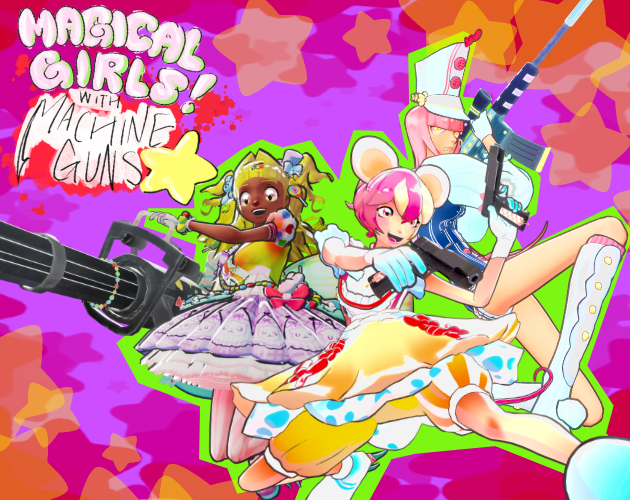
MAGICAL GIRLS WITH MACHINE GUNS
LINK TO DOWNLOAD
Gameplay Video
CLICK HEADERS TO COLLAPSE OR OPEN CONTENT
Technical Art
I was responsible for creating all of the VFX in Magical Girls with Machine Guns.
Game RTVFX has always been an interest of mine. Without VFX – video games would lack the impact that makes them so fun and addicting to play.
I consider VFX to be the backbone behind the ‘feel’ for the player, so it was one of the most important roles on the project that I was excited to fulfill.
This is a VFX reel of most of what is in the game.
Individual VFX demos are also shown below.
Zombie Kill Demo
Shooting Demo
Melee Demo
Zombie Spawn Demo
Water Projectile Demo
Magic Blast Demo
Magic Wave Demo
Stun Lock Demo
Footsteps Demo
Jump Demo
Fan Mail Package Open Demo
Here is the Niagara system for the Grimoire Beam FX.
Many of the VFX in the game use several layers of emitters and use custom scratch pad modules to achieve specific behaviors.
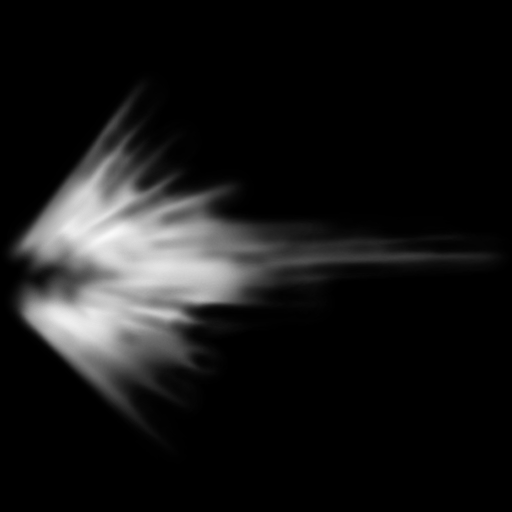
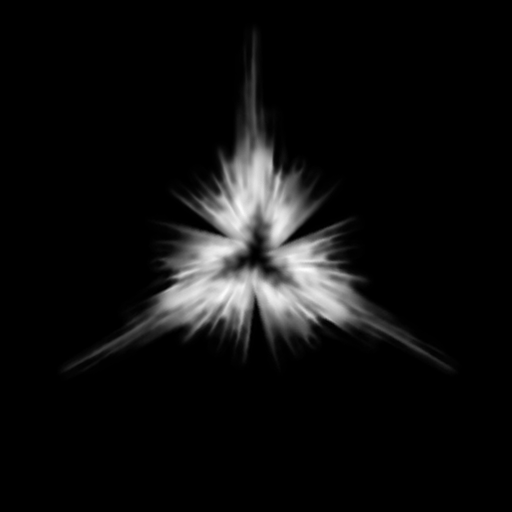

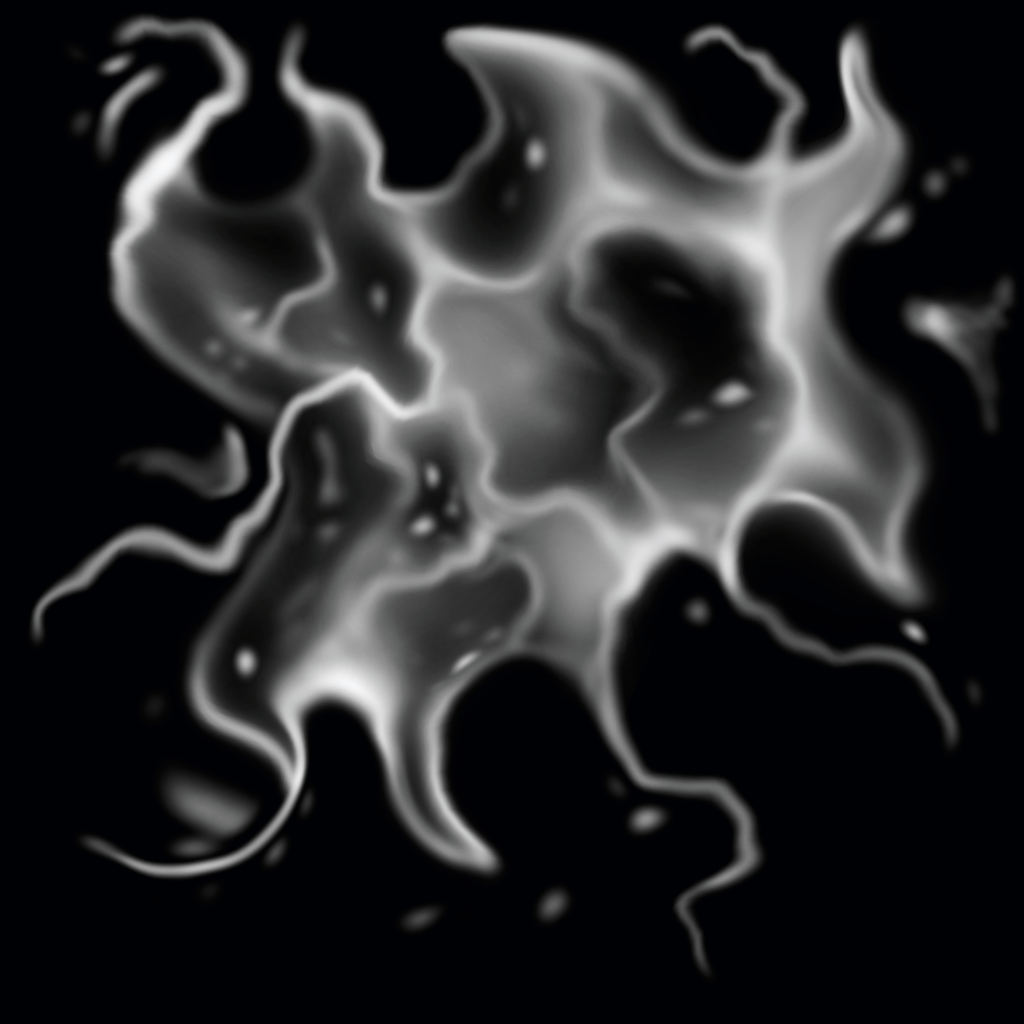
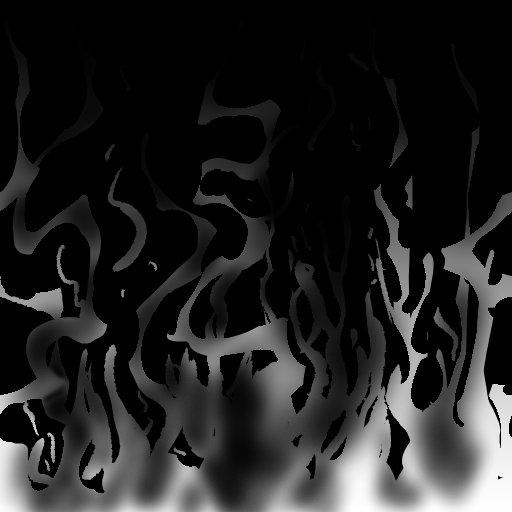
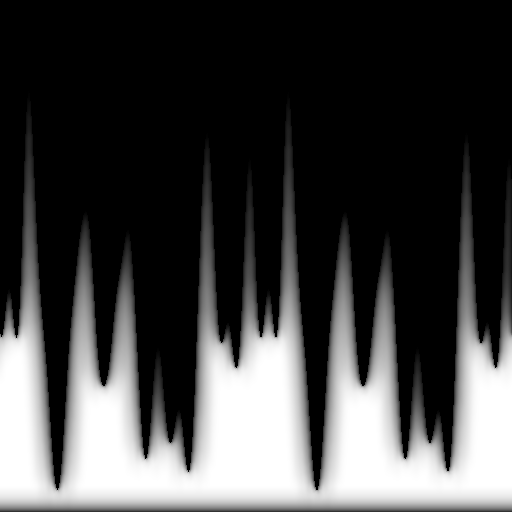

Examples of alpha textures I used for the VFX
All of the VFX were made with alphas created by myself from scratch using Clip Studio Paint and Substance Designer.
If you’d like to see more of the Niagara Systems and blueprints for the VFX, you can look at them in this presentation.
Spline Mesh Demonstration
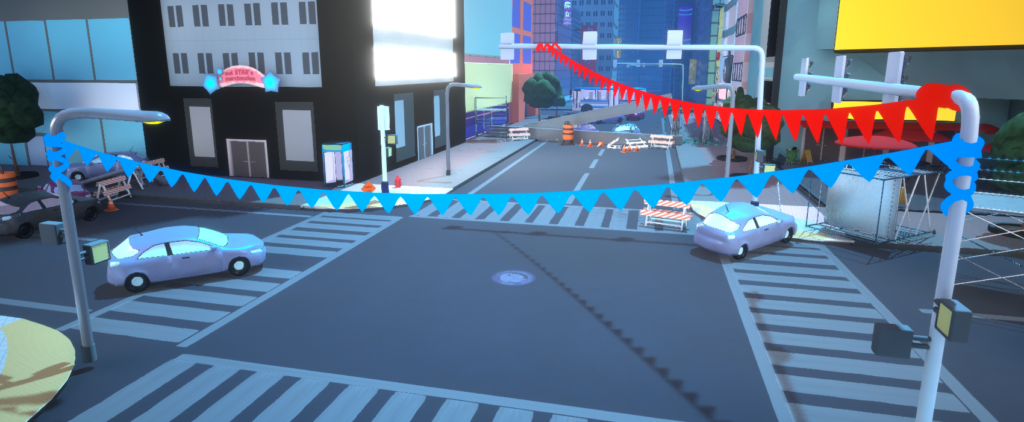
We had these streamers in the environment key art so I felt it was necessary to develop a tool that allowed for bezier curved based mesh generation.
I made use of Unreal’s procedural generated content plugin and created this spline mesh tool that can take any static mesh and deform it according to a curve.
Parallax Occlusion Map Decal Demonstration
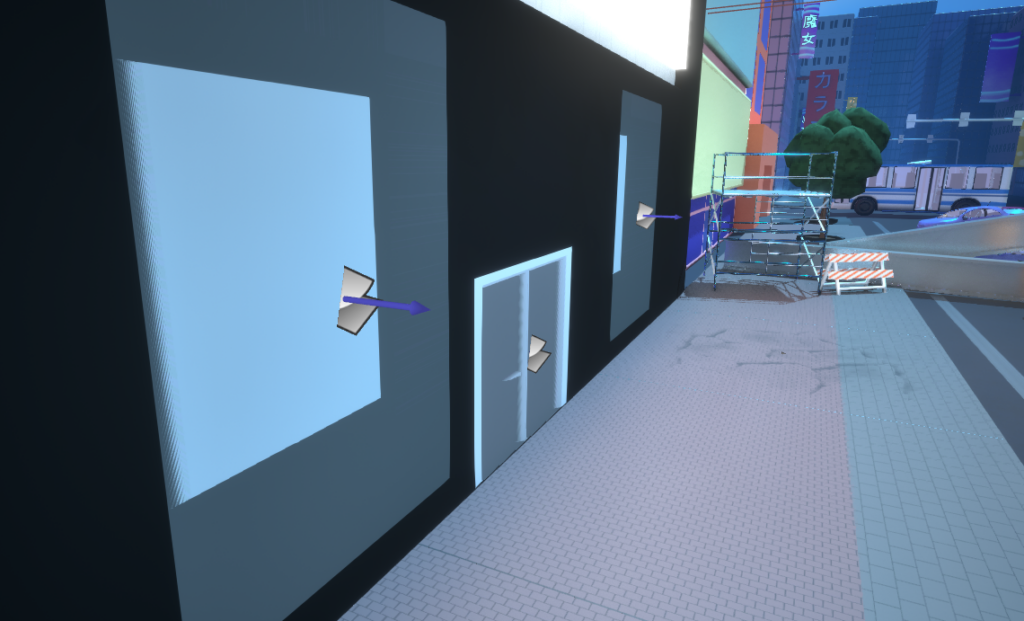
To make buildings faster, I decided to look into creating Parallax Occlusion Map decals to achieve details like windows and doors.
As you can see in the video demo, the parallax occlusion mapping grants the illusion of physically modeled geometry without actual geometry.
This allows for easily manipulation of how buildings can look and there is no need to worry about topology.
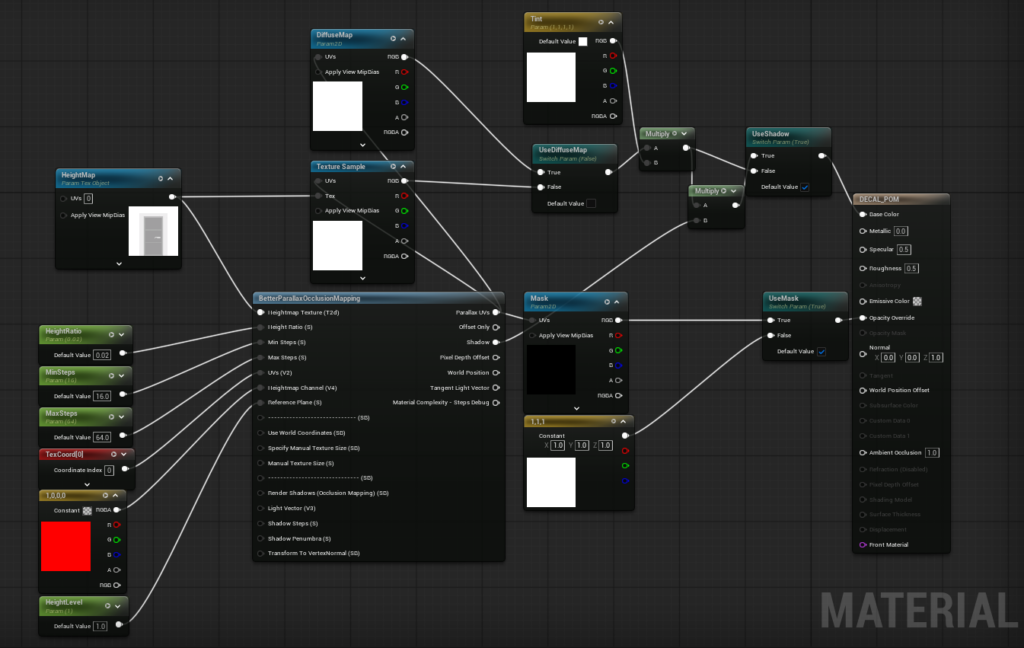
This is the material set up for the Parallax Occlusion Map decals. It has customizable parameters that allow for multiple POM decal variations.
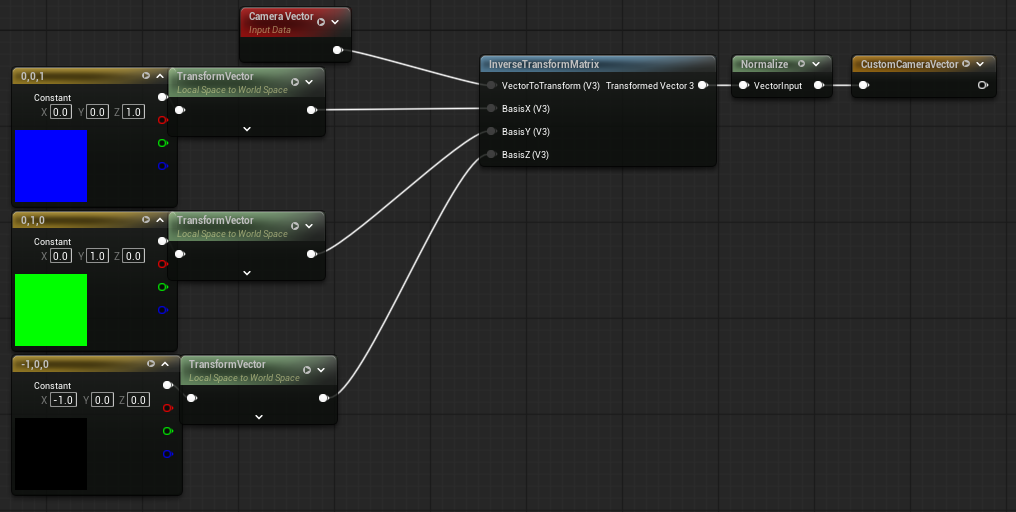
However there is an issue with the engine provided POM material function, it only works facing upwards and not sideways.
To address this, I created a customized parallax occlusion mapping material function that modifies the camera vector to account for world space normals, referenced by PrismaticaDev on Youtube.
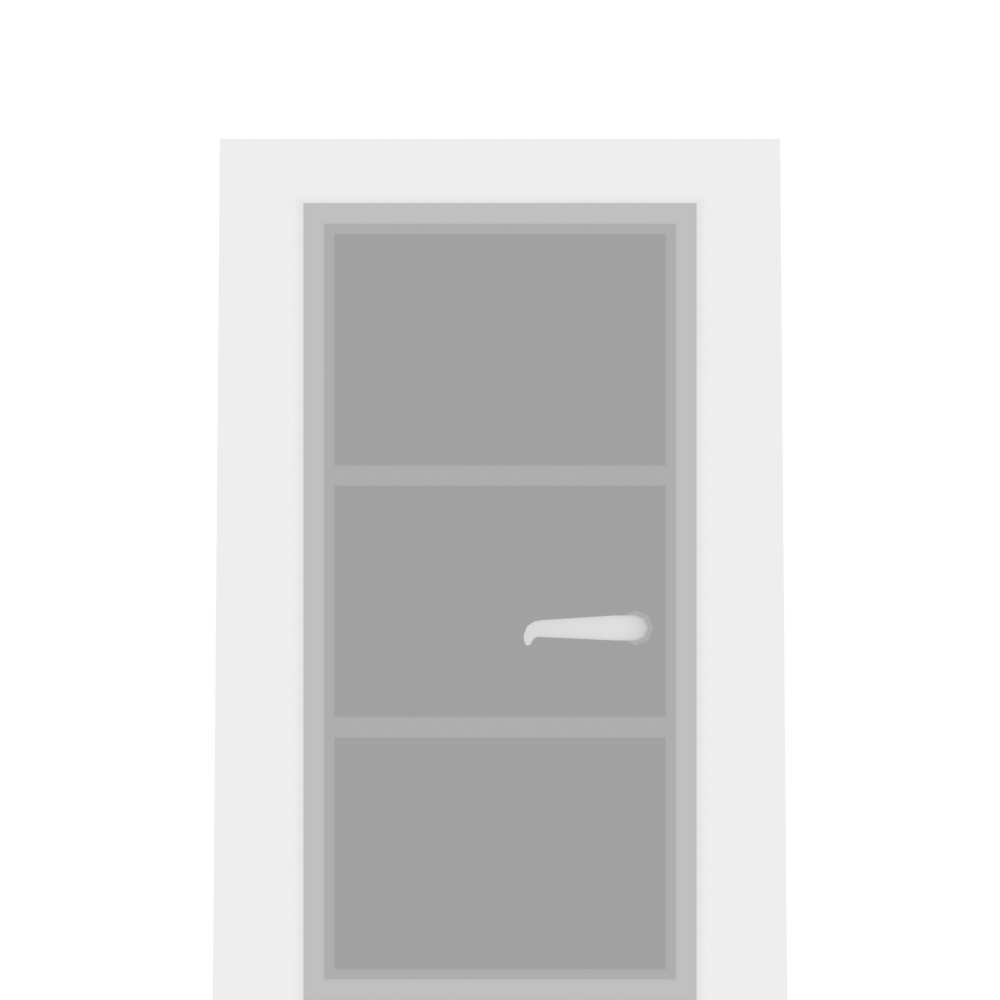


Here are a couple examples of height maps that I created inside of Blender and Substance Designer that are used to create the depth for the POM decals.
The height maps for the doors were created by modeling them in Blender and rendering out it out with a special material that darkens based on the distance from the model’s origin distance.
Programming
As you may have seen from the content on this page, there is an item system in Magical Girls with Machine Guns.
When the player unlocks a ‘fan mail package’ they will receive an item that will grant the player an effect.
I was granted the challenge of developing this item system and I’ll briefly describe how it works.
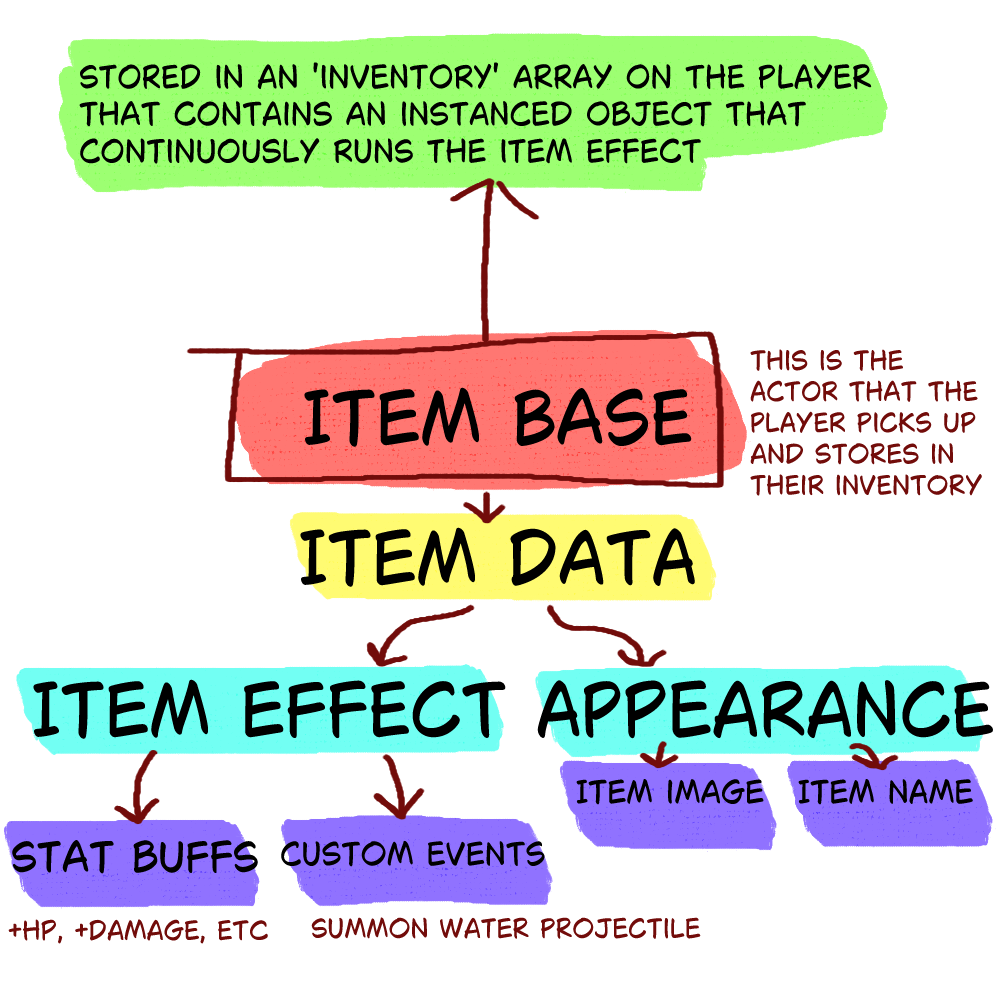
Since items are broken up into several different elements, I figured it would be easier to show how it works in a diagram.
The highest level of an item is the Item Base Object that houses the item data, and the item data contains the item effect class and appearance.
When the player picks up an item, it will spawn a new item effect object that runs its custom logic to modify the gameplay.
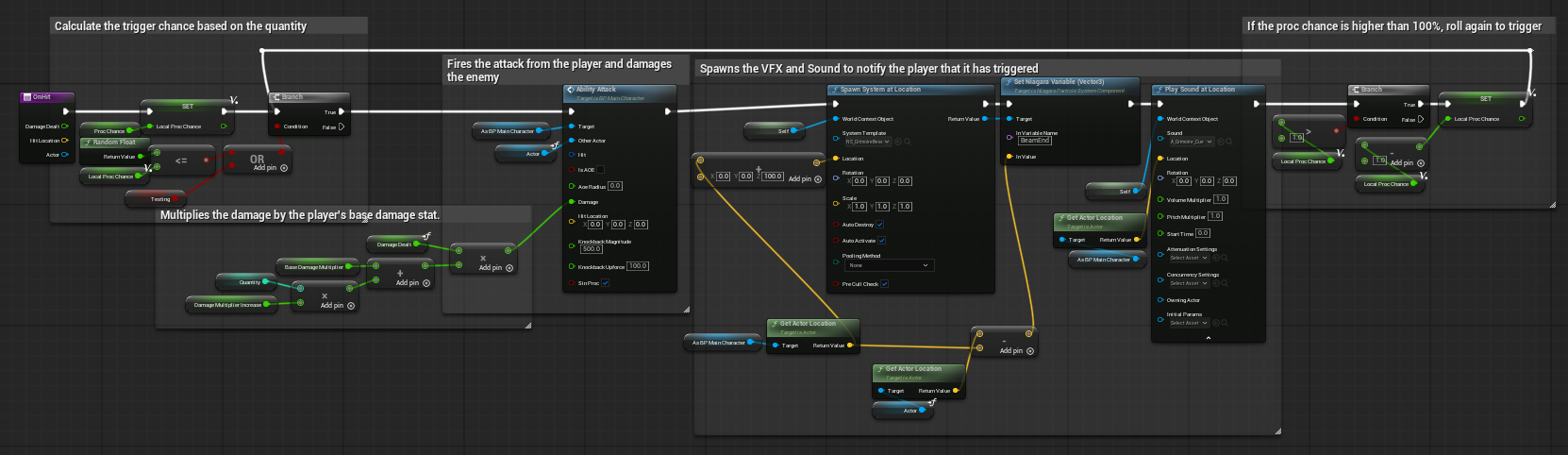
Here is one example of one of the item effects. This is for the ‘Darkian Grimoire’ item which gives the player a 5% chance per stack to fire a magic bolt that deals extra damage to enemies.
This is a good example of how chance, player stats, and VFX are accounted for in an item.
There are 16 items currently in the game that are like this, with their own custom effects and logic that runs when the player picks them up.
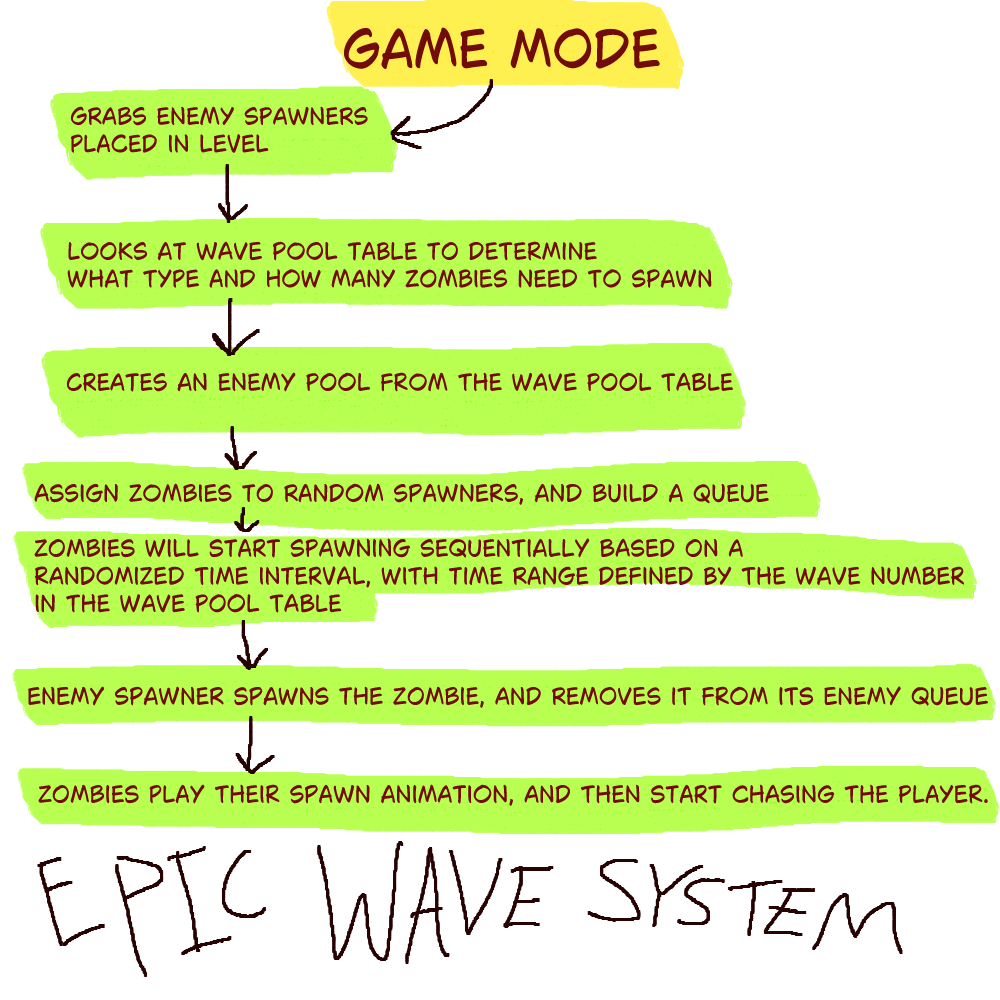
There is also a Wave system that spawns the zombies. It all stems from the Main Game Mode class.
The systems requires that enemy spawners are placed in the level so that the game mode is able to find spawning locations for the zombies.
I also make use of a data table that contains the zombies that are in each wave and how fast they spawn in.
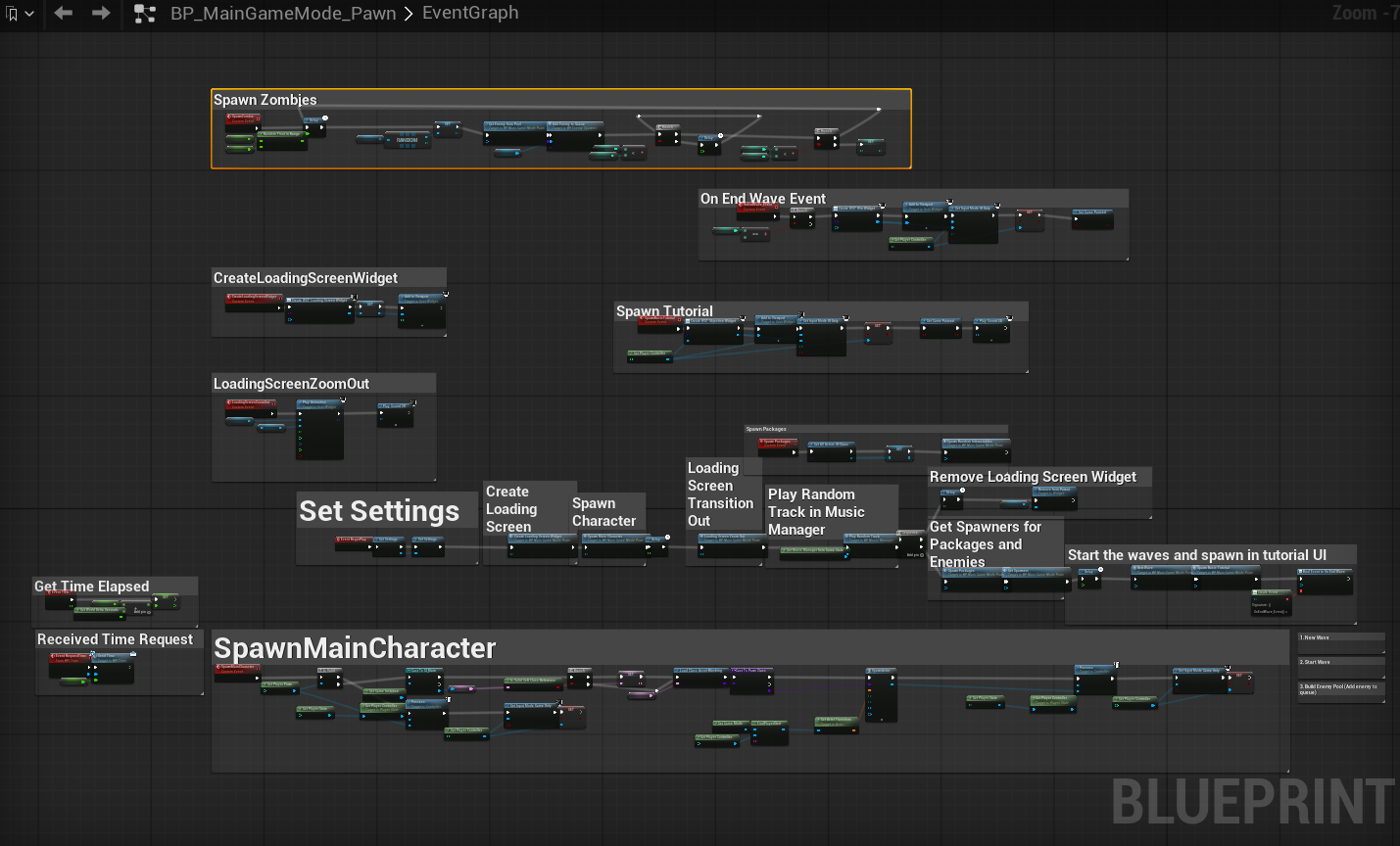
This is what the event graph for the Main Game Mode blueprint.
A lot of the wave and spawning logic is contained within blueprint functions, so it’s difficult to show how it all works in screenshots, but this is a small preview of how the blueprint looks.
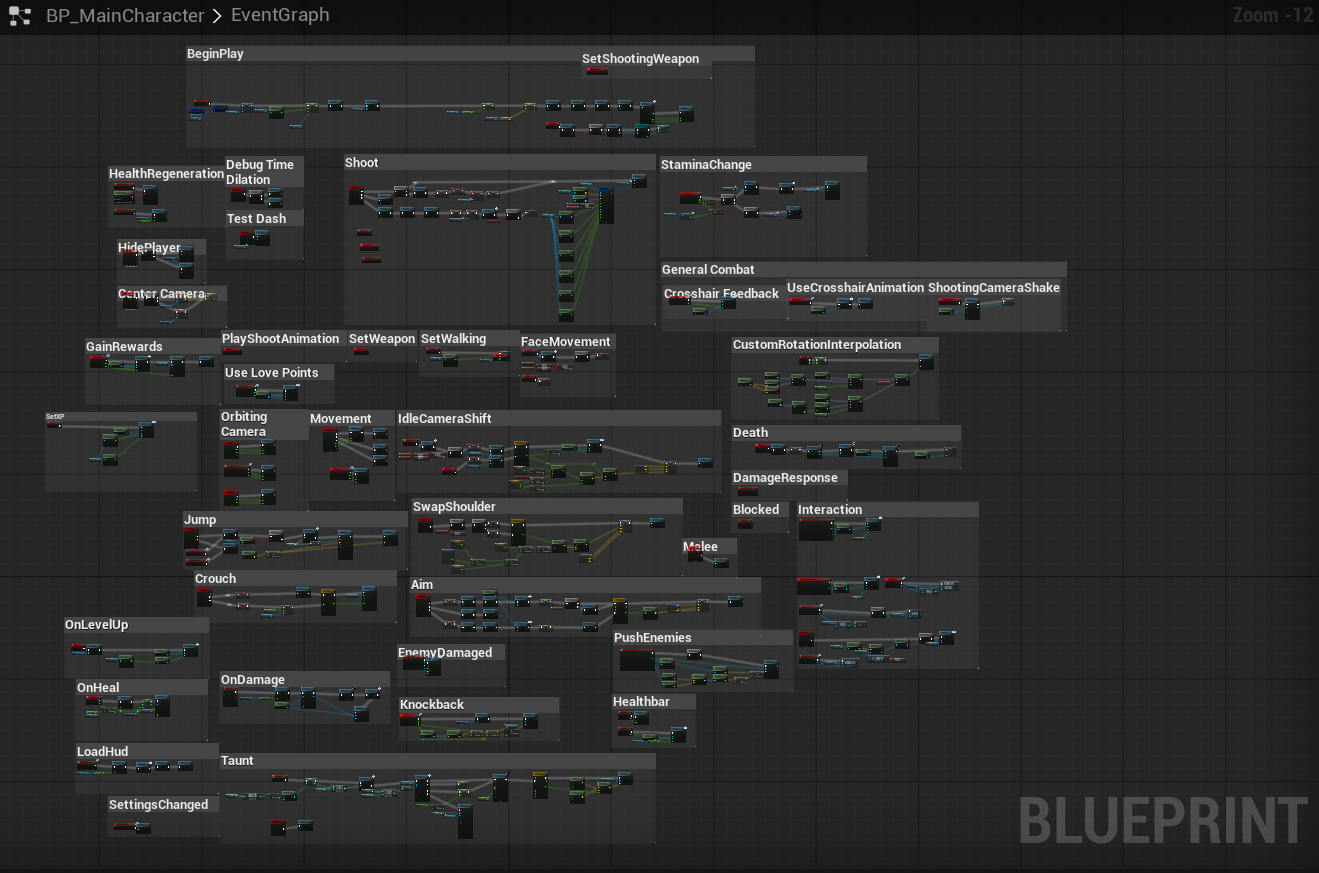
This is the event graph for the Main Character class.
It has all of the features that the player needs for shooting, melee, receiving feedback, losing or gaining health, etc.
I’m making use of polymorphism for implementing each magical girl as their own character with unique features.
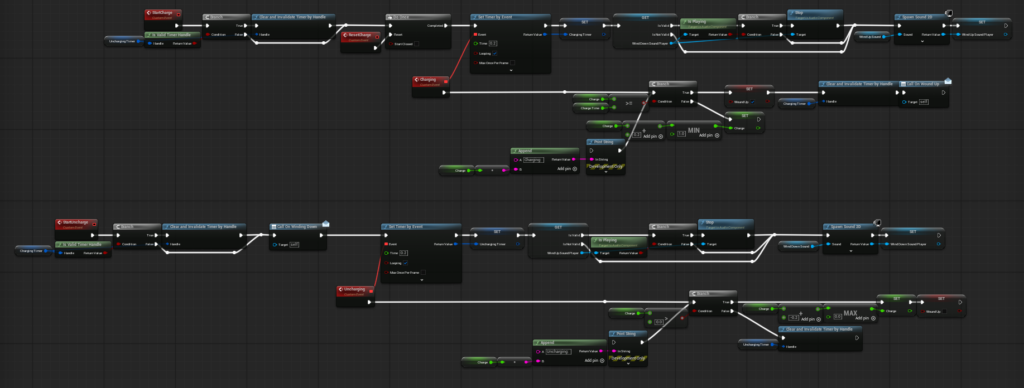
For instance, Minnie has a special charge up when she shoots that is only unique to her, but still inherits all of the other functions that the BP_MainCharacter class has.
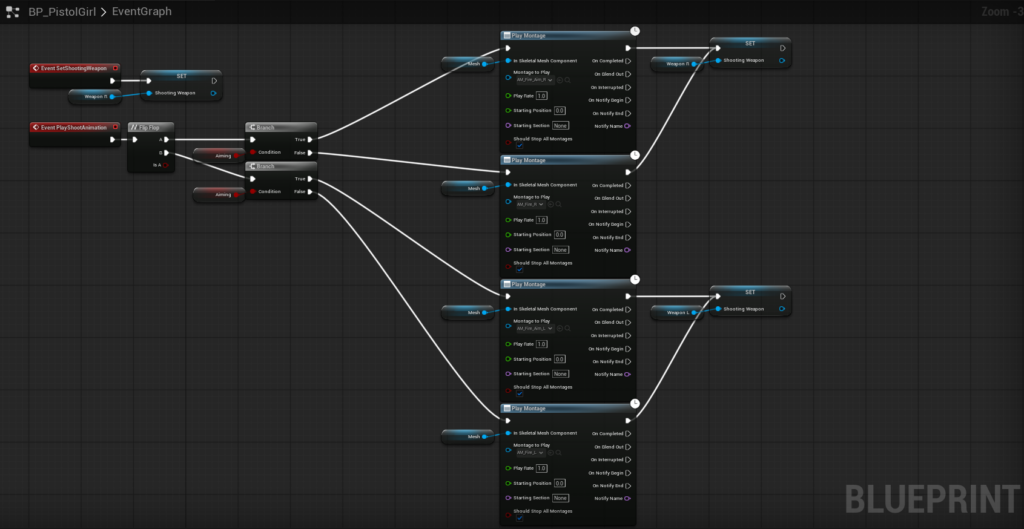
Another example is Chaka’s dual pistols which require flip flopping animation montages when she shoots, she has custom event logic for that when she shoots as well.
Although none of the nodes are readable in the image, the comments give you an idea of how much the blueprint has expanded from the basic character class provided by Unreal.
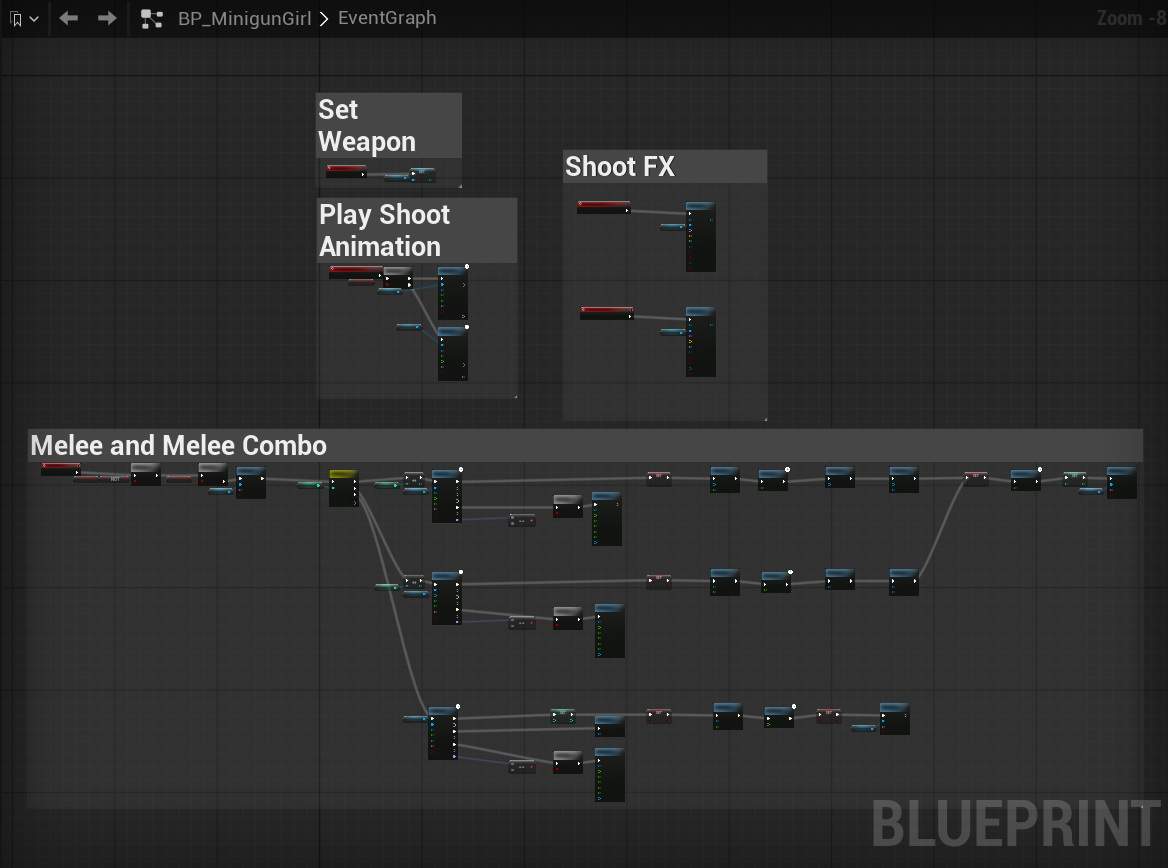
Here’s an example of Minnie the Minigun Girl’s blueprint, a child class of the Main Character class.
Minnie’s blueprint overrides the melee attack events to use her own special logic for her melees. The melee attacks trigger the animation montages which are special animations that can be fired from blueprints to play on the character.
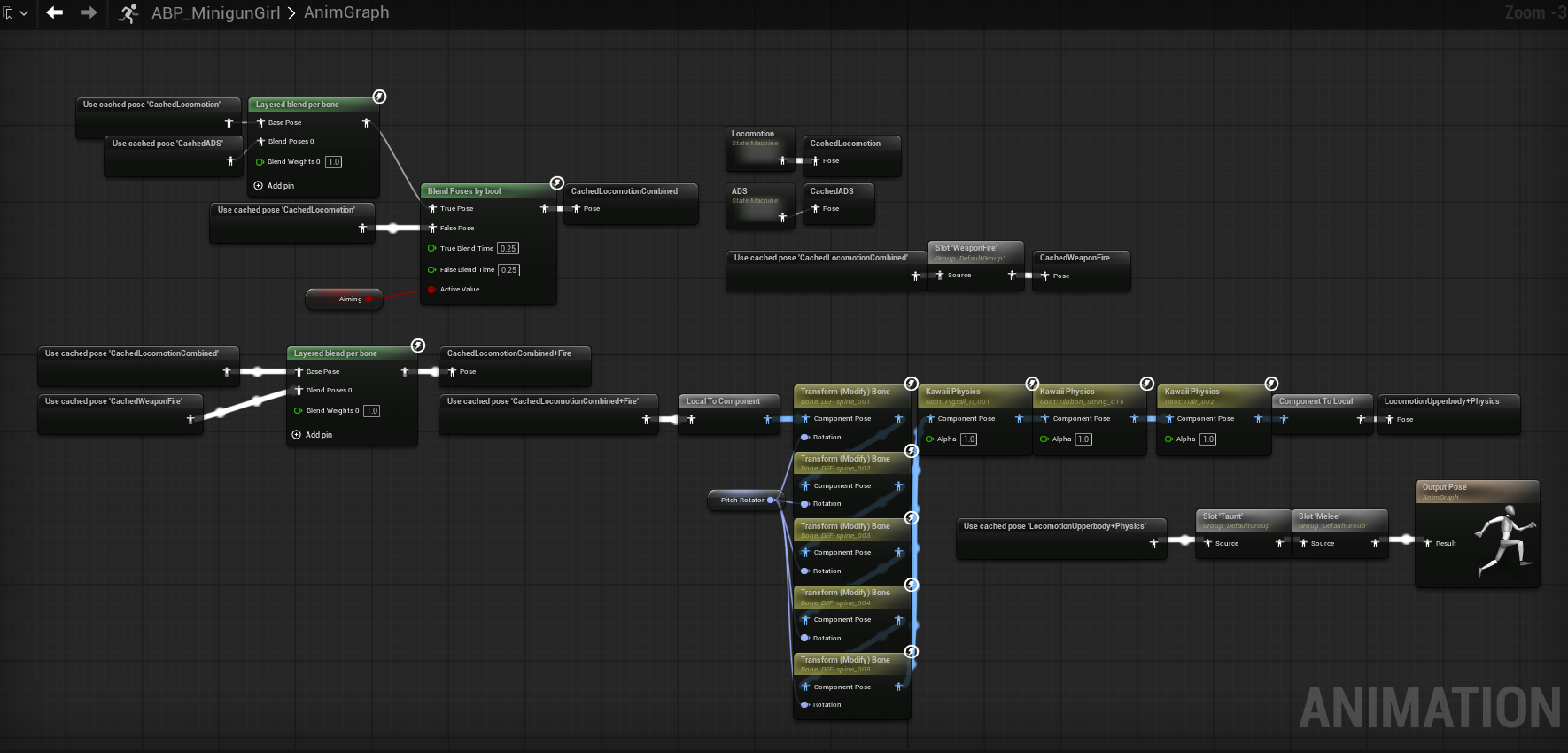
This is Minnie’s anim graph.
It contains the state machine for basic movement like walking and jumping.
When Minnie shoots her minigun, the shoot animation will play on the upper half of her body and keep the lower half in the locomotion state machine for movement.
There is also custom logic for upper body rotation based on where the player is aiming, and also bone physics to give the character dynamic follow through animation.
I use the Anim Slots as like layers that can play on top of the base state machine animation.
CHARACTER
I created the character model for Minnie the Minigun Girl.
I was excited to model her when I saw the concept art turnaround by Gabbi Levy, she has so many elements and intricate shapes that I just wanted to dive right into modeling her right away.
This character took about 2-3 days of modeling, I wanted to get through it pretty quick since this was the first character model for our game.
Her character body model was also used for the other girls. Finishing it quick allowed the rest of the team to get started on rigging and animating early on in the semester.
Her outline is created by using the classic technique of a vertex position offset to create a duplicate larger mesh with front-face culling. This technique is done in the shader material that is assigned to her skeletal mesh via overlay material.
The stylized cel shading is done by clamping ranges from the diffuse shading and using those clamped regions as masks for specified colors for the artist to control.
Character Model by Anthony Le
Surfacing by Gabbi Levy
31k Verts – 54k tris
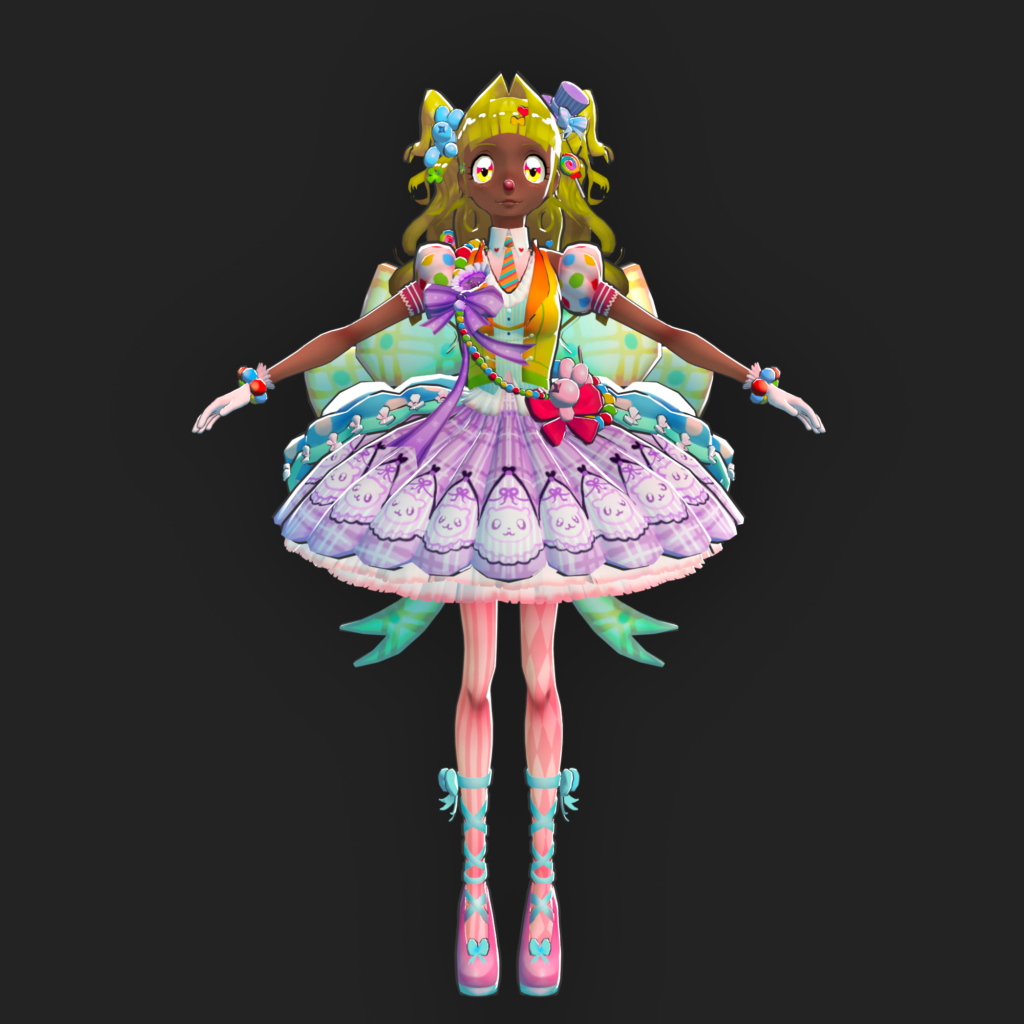
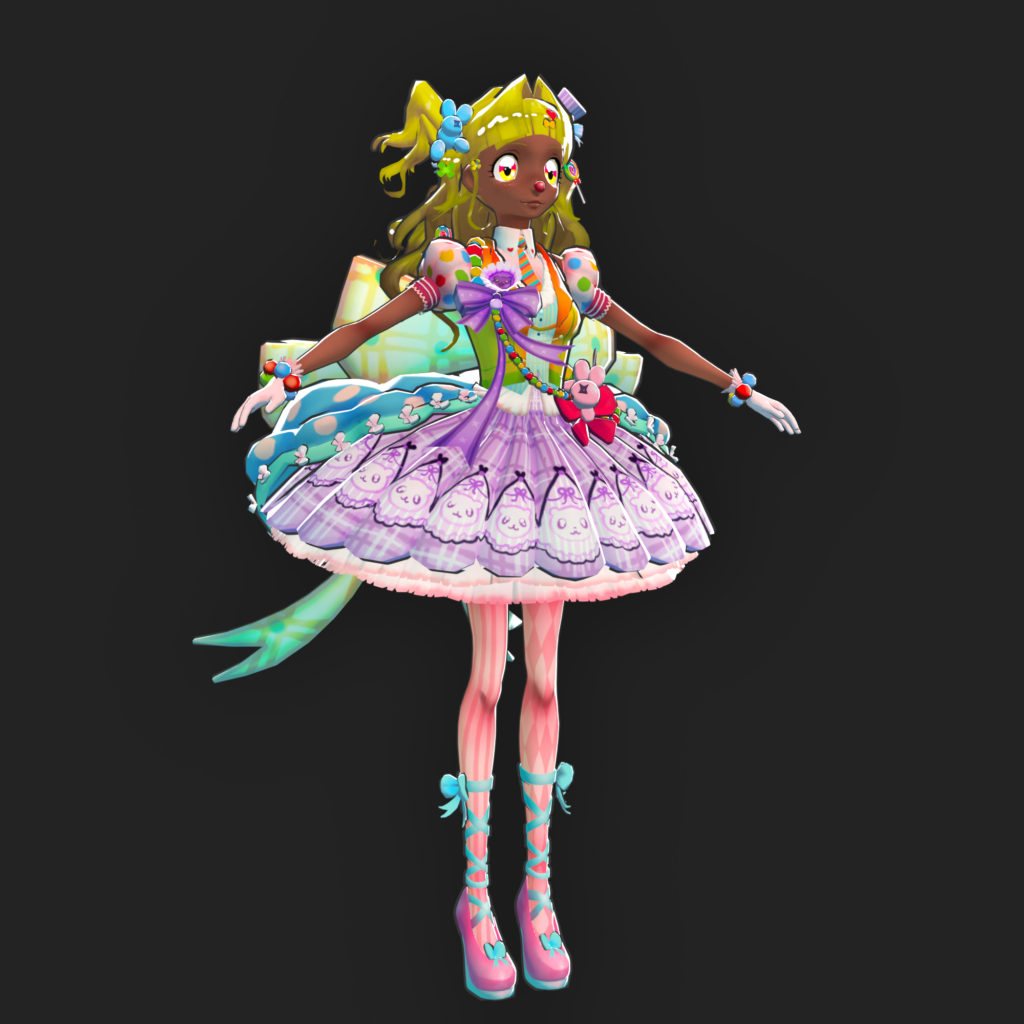
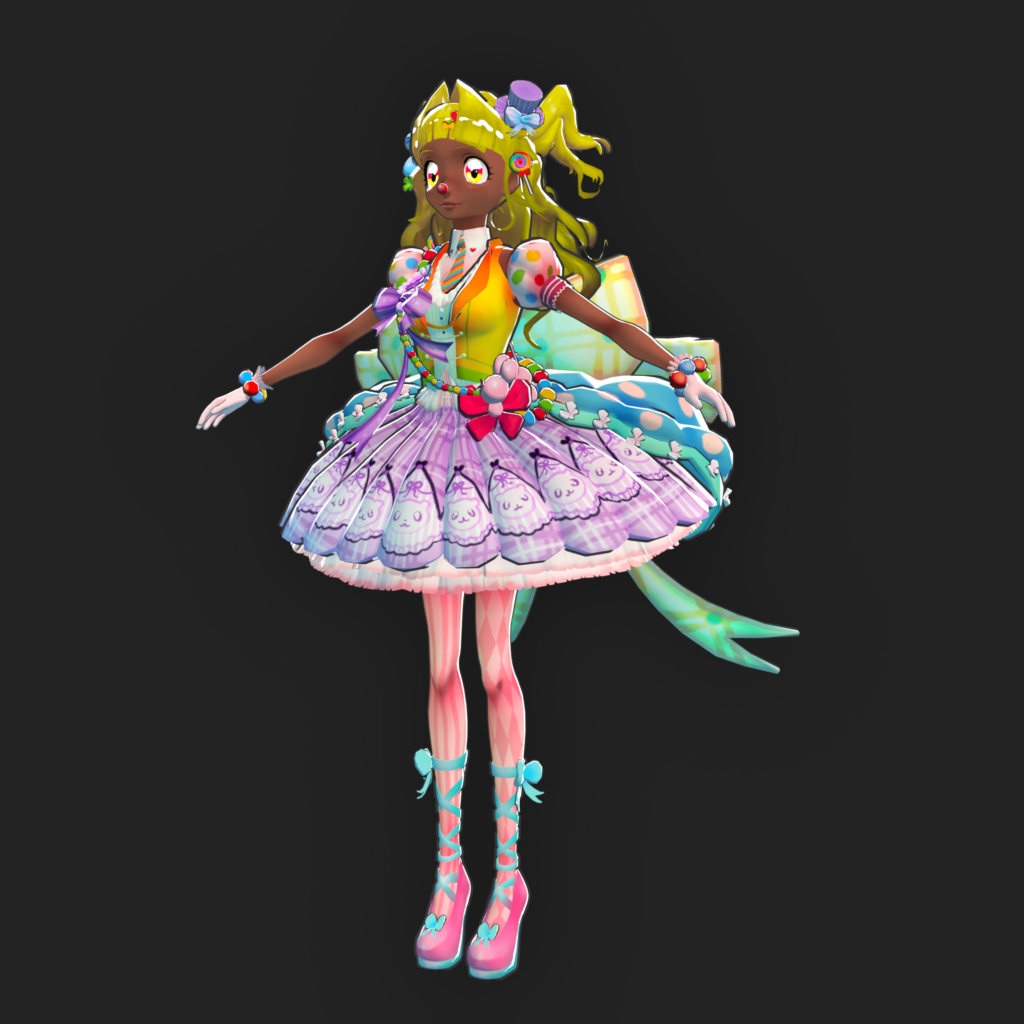
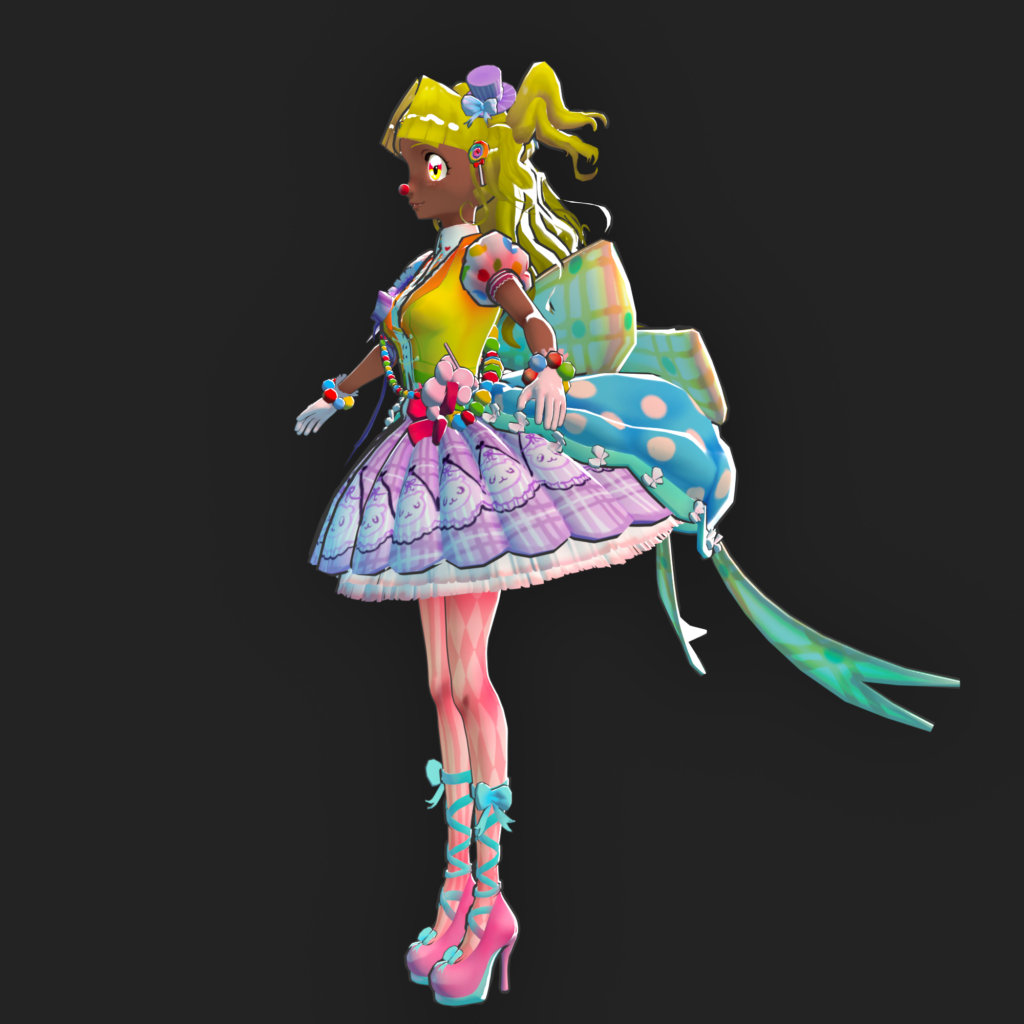
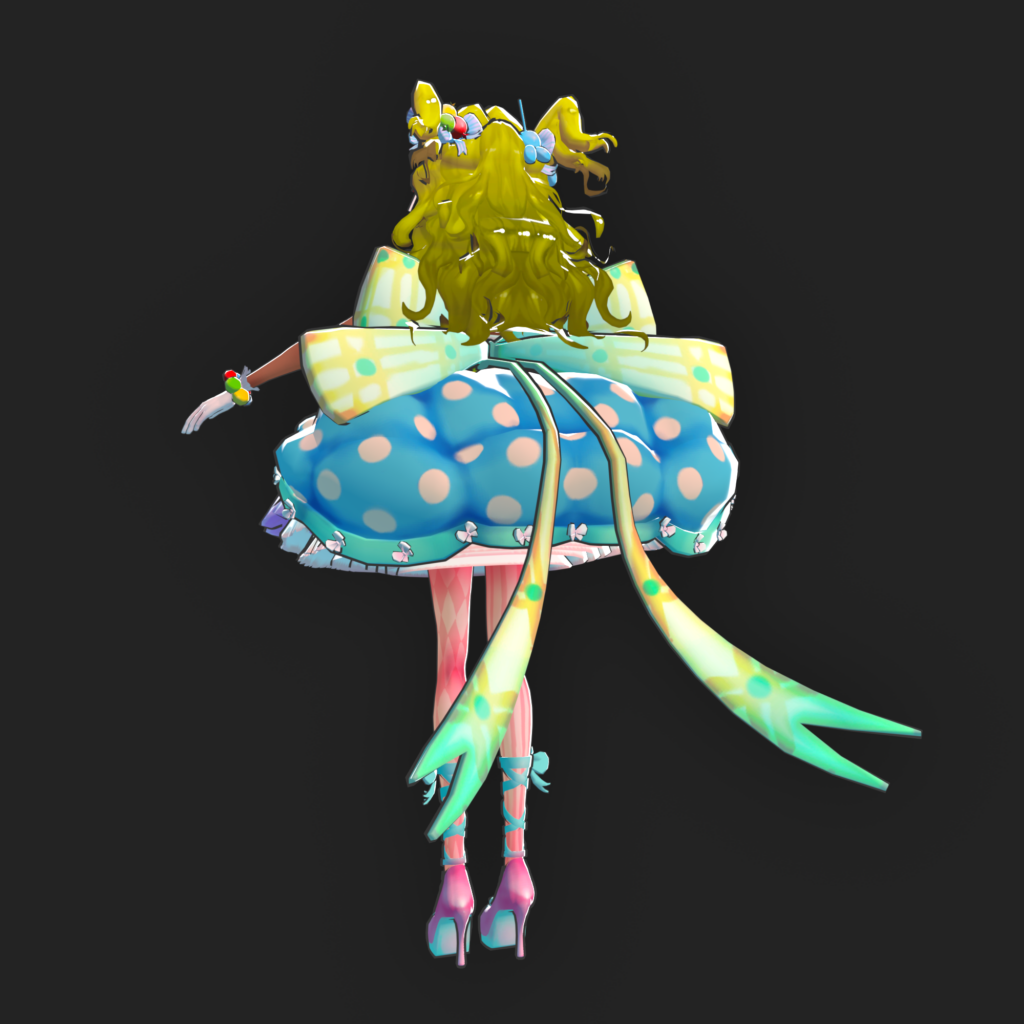
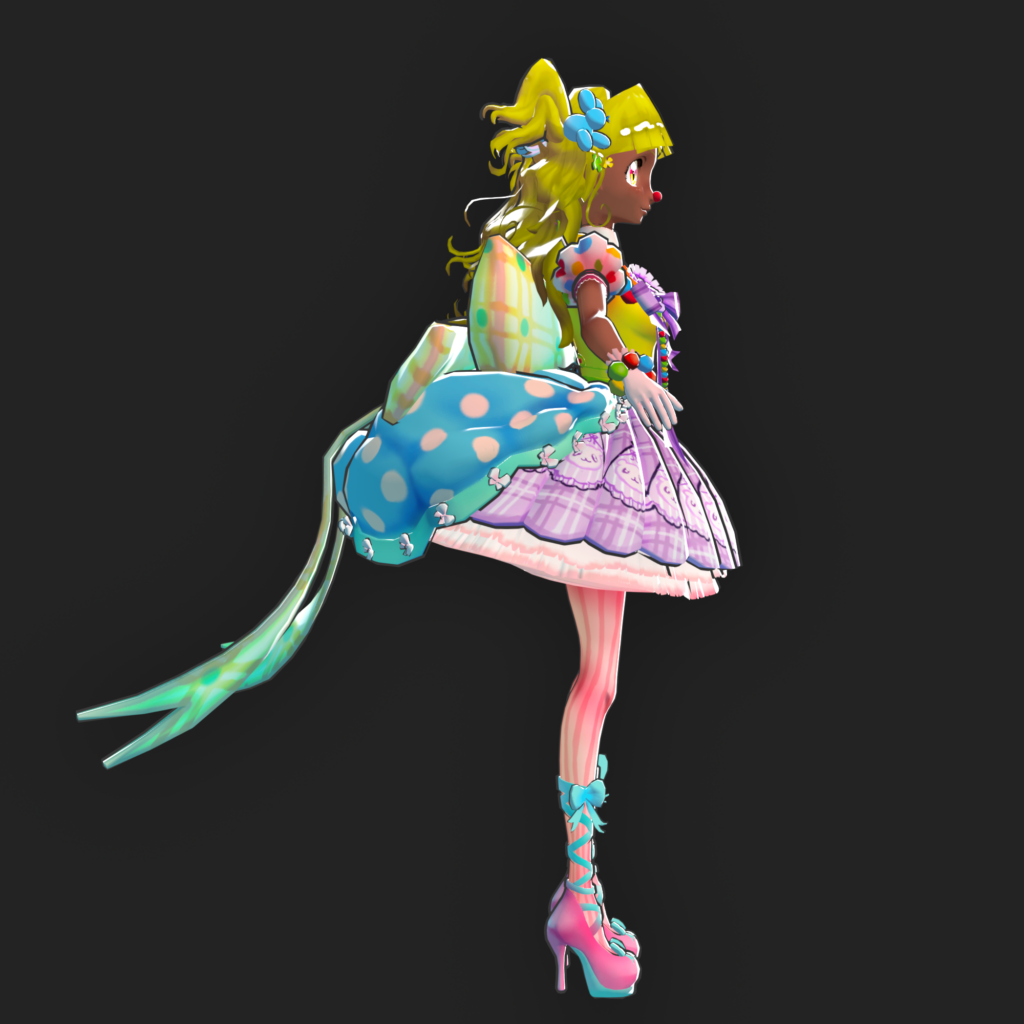
In-Game Render
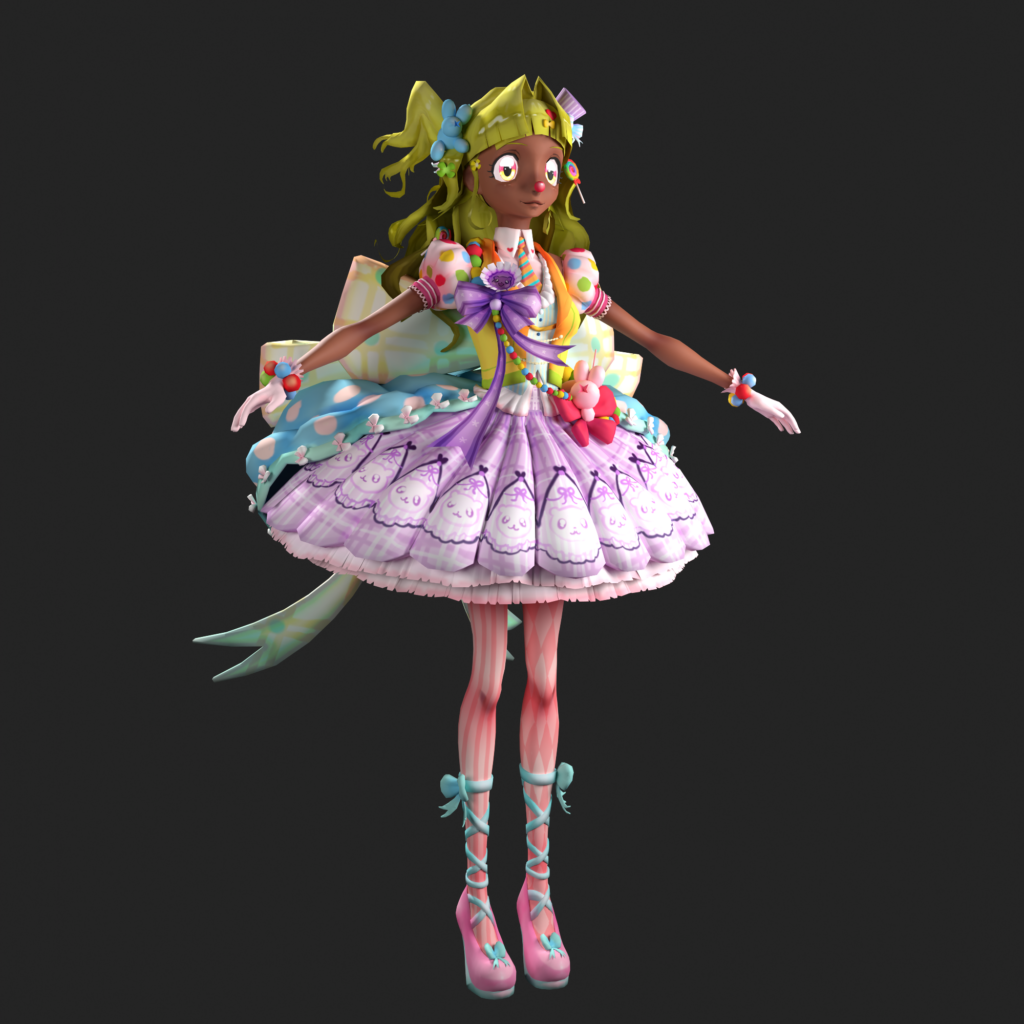
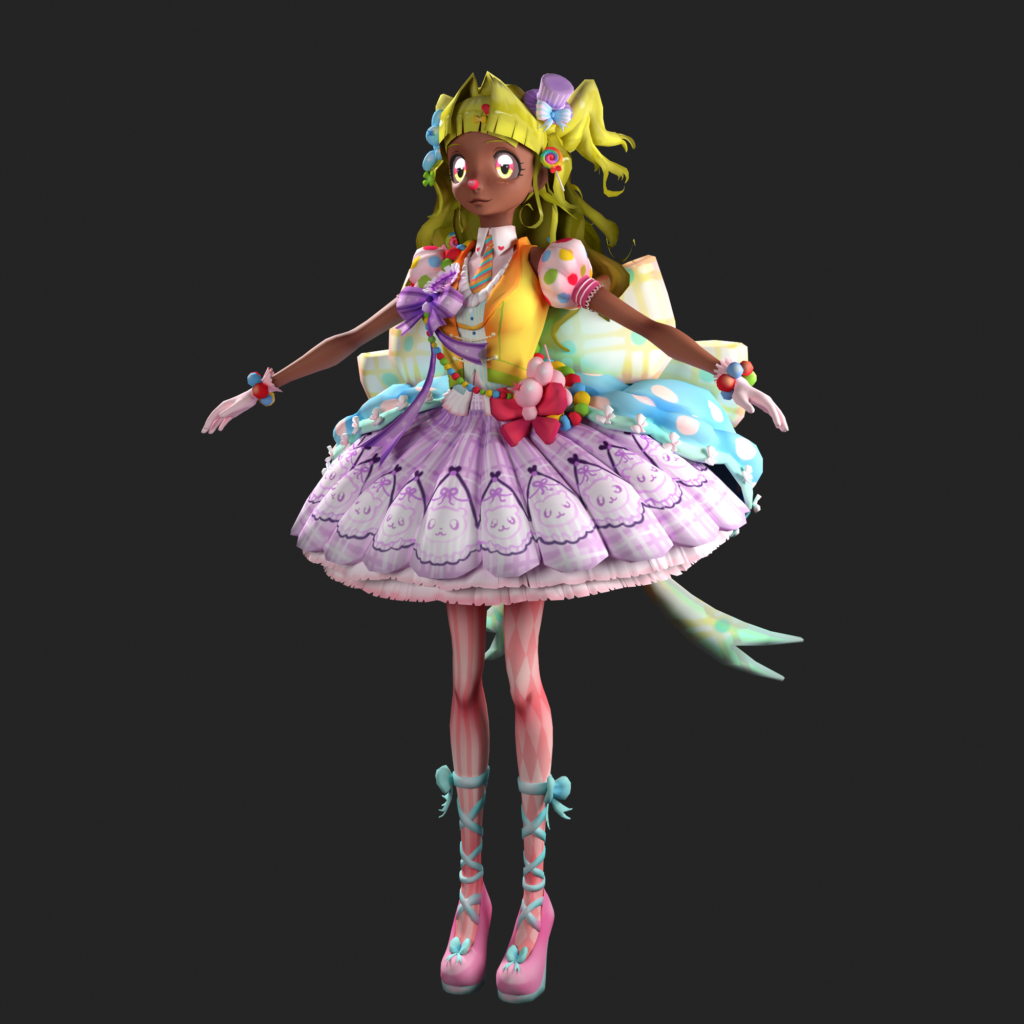
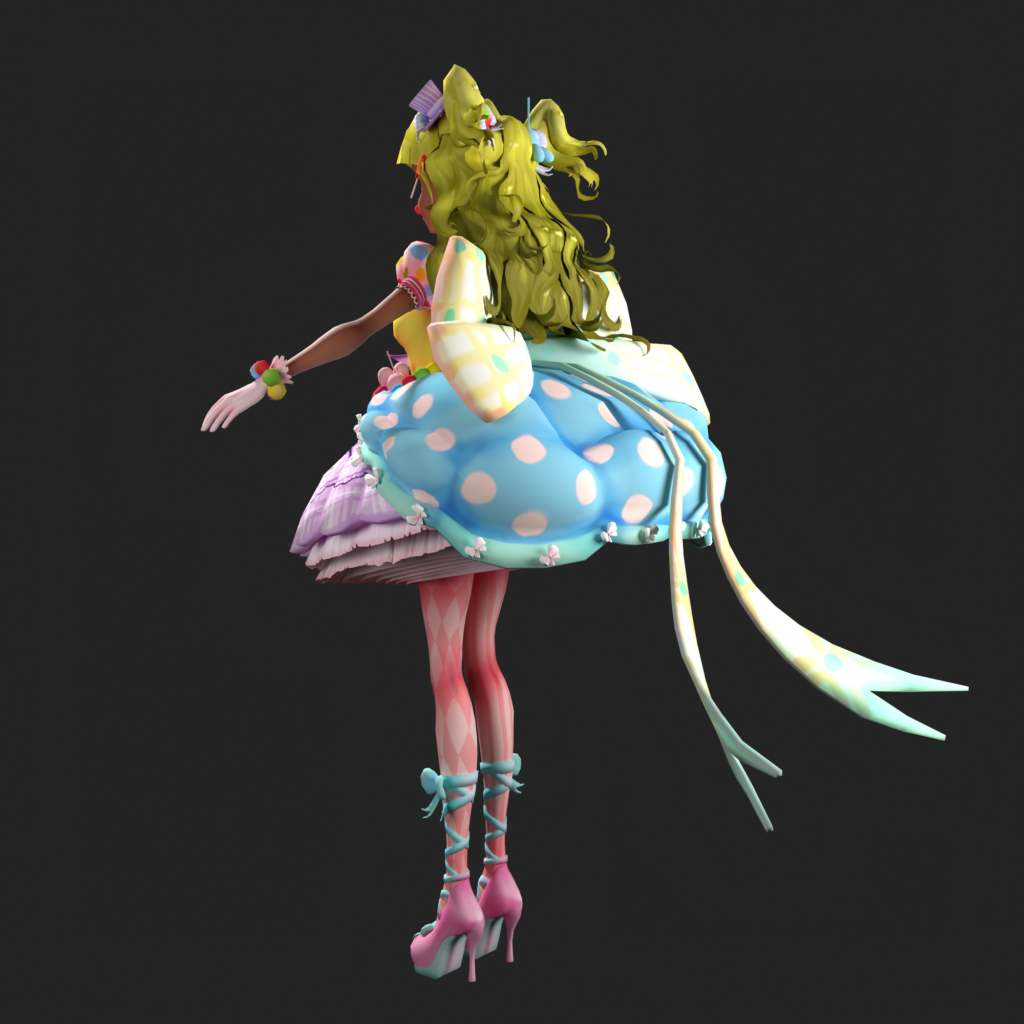
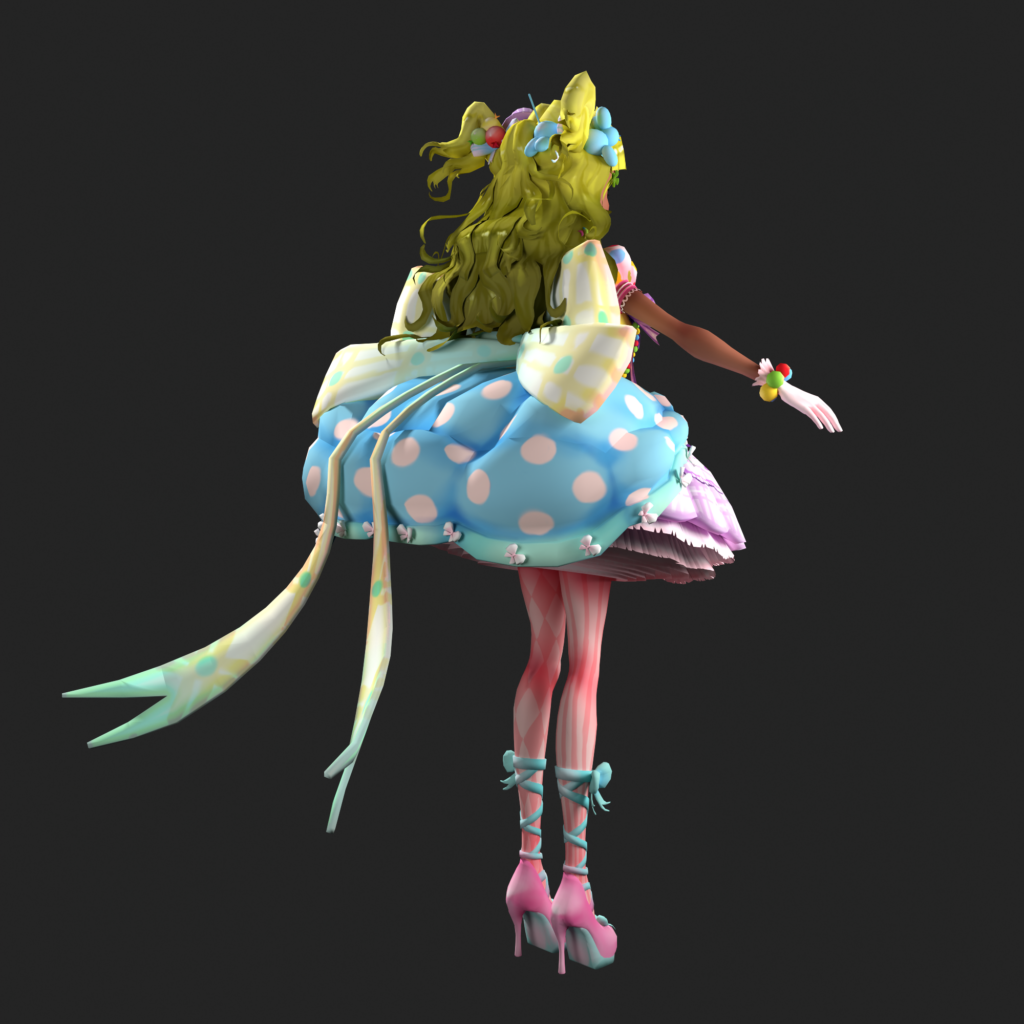
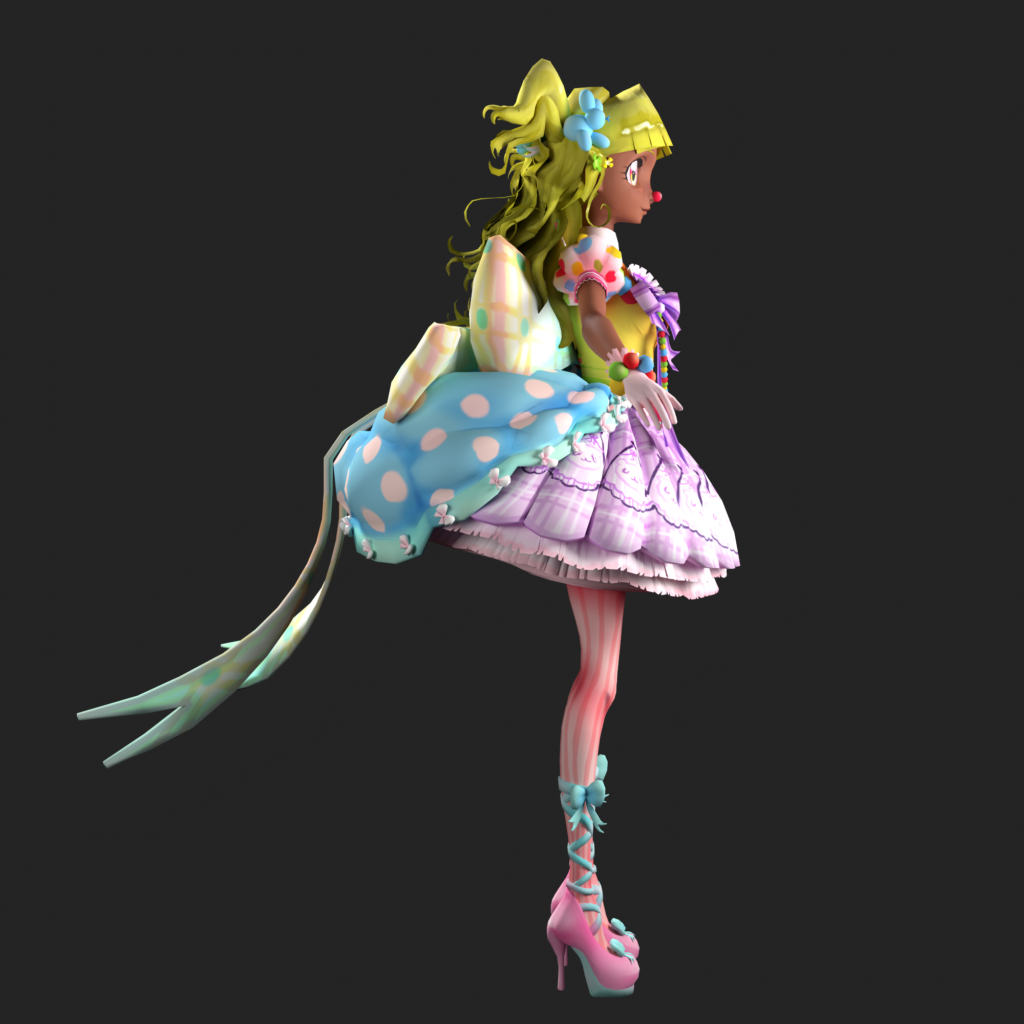
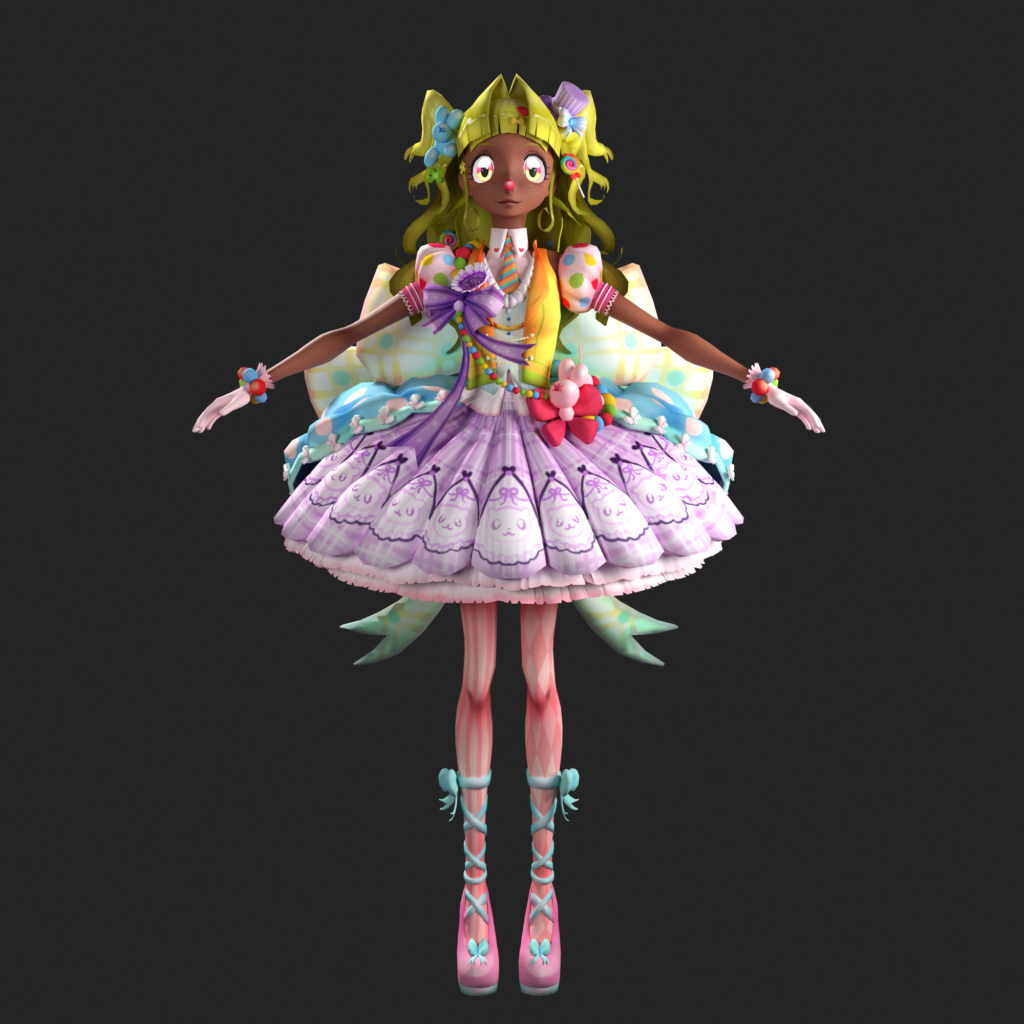
Diffuse Render
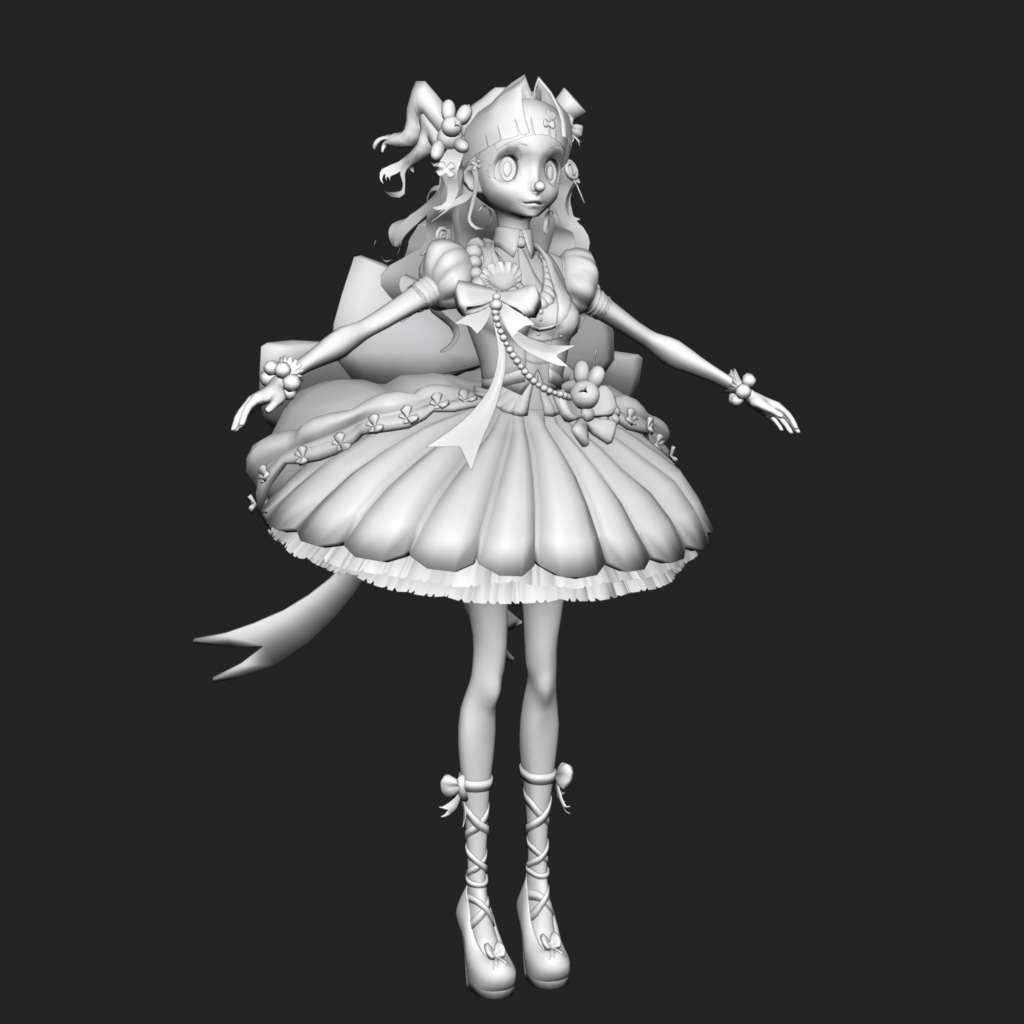
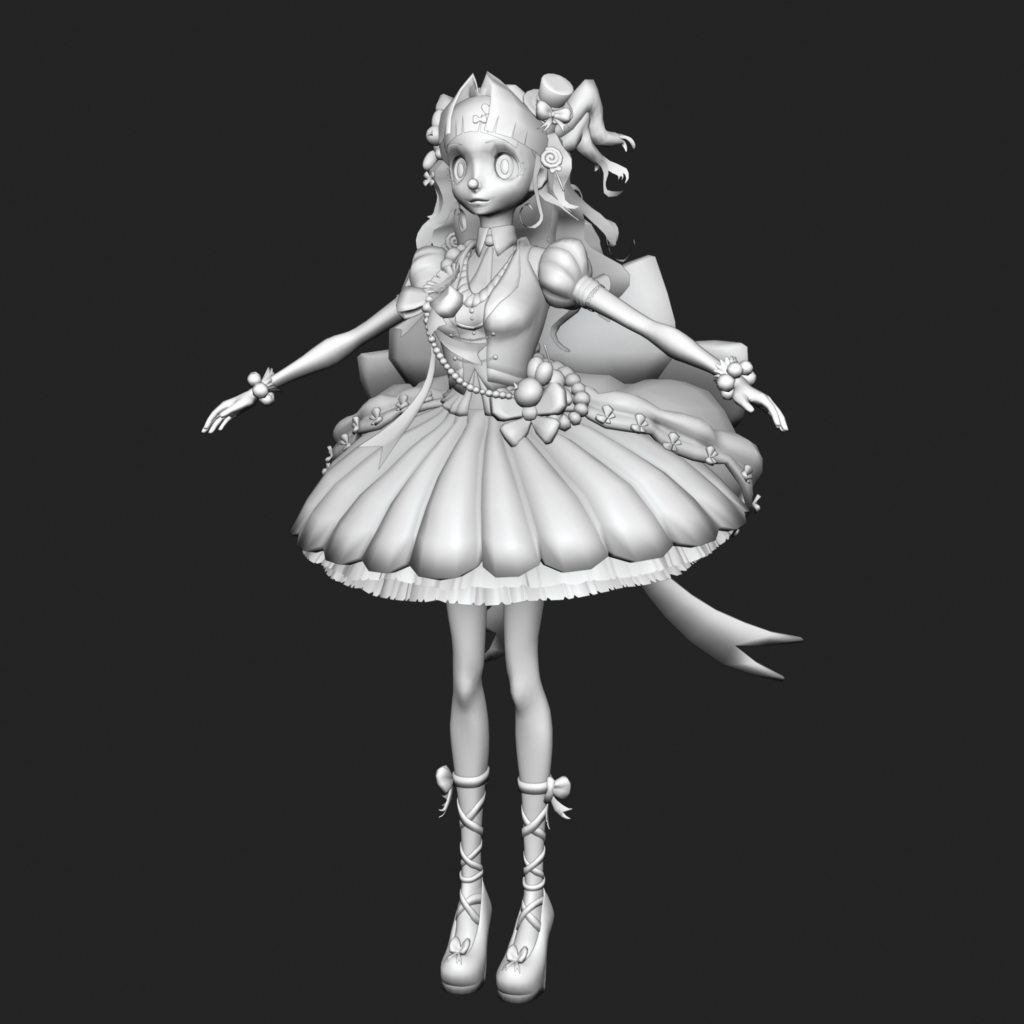
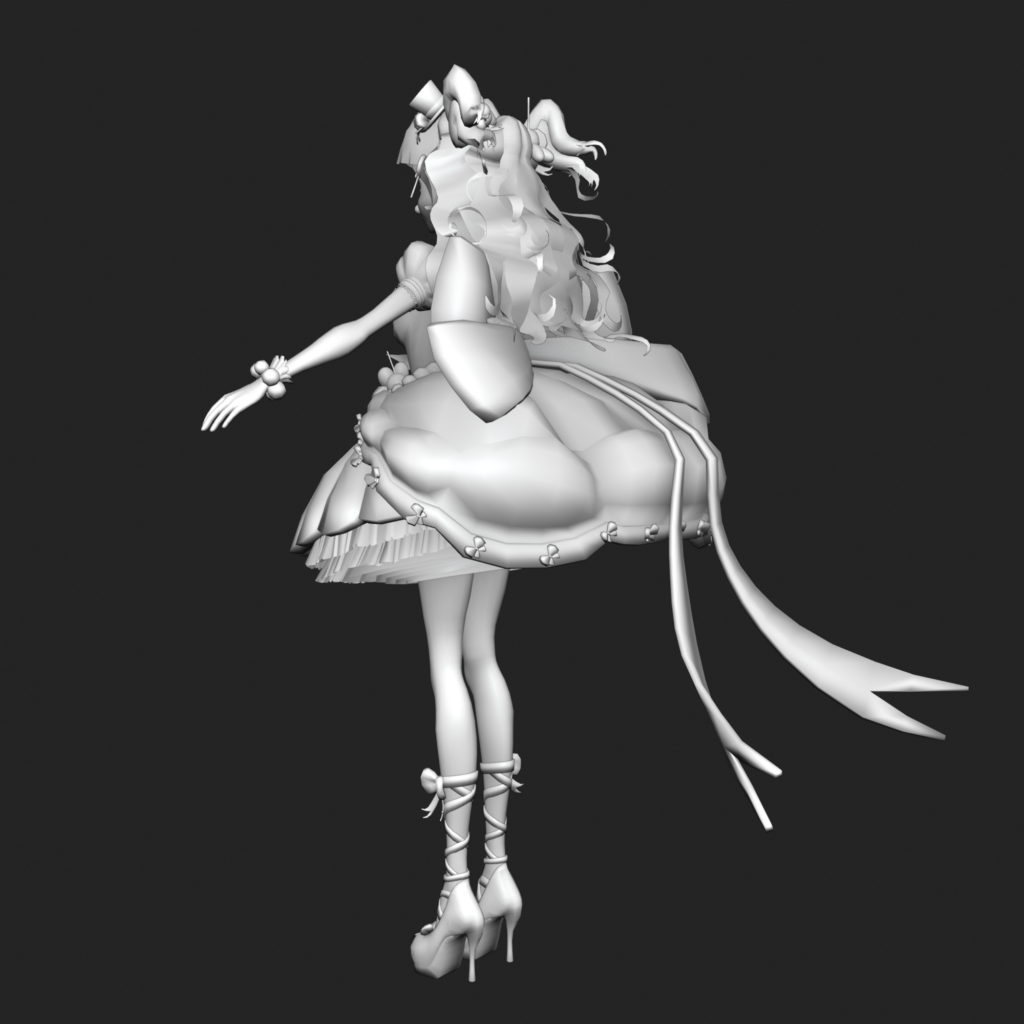
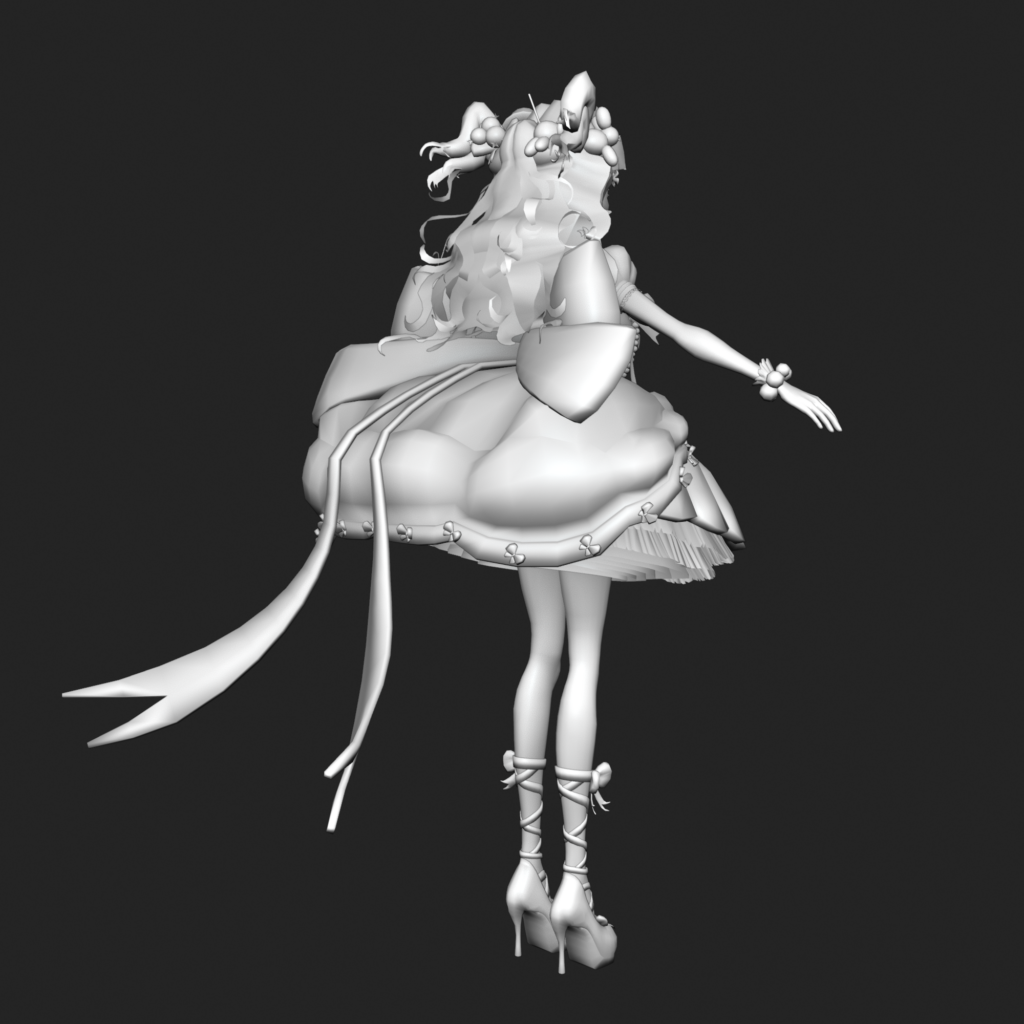
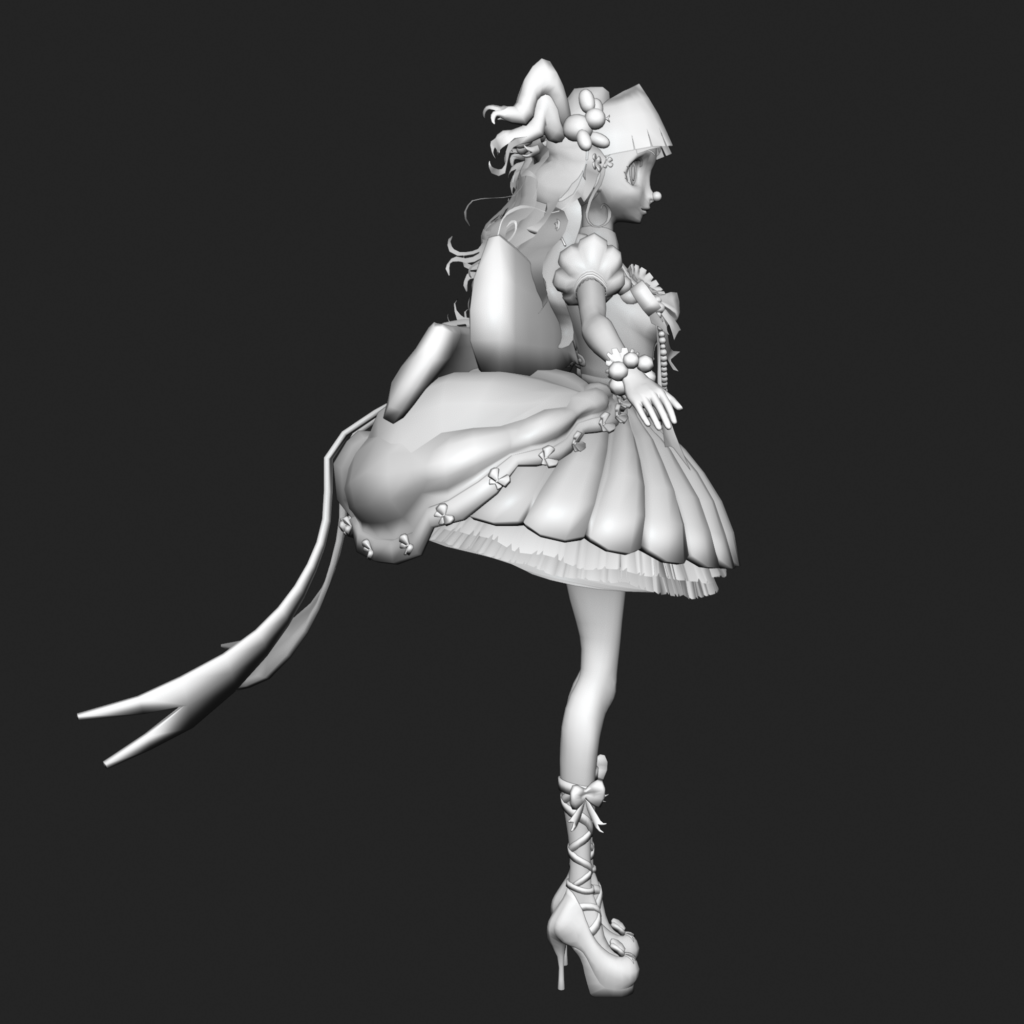
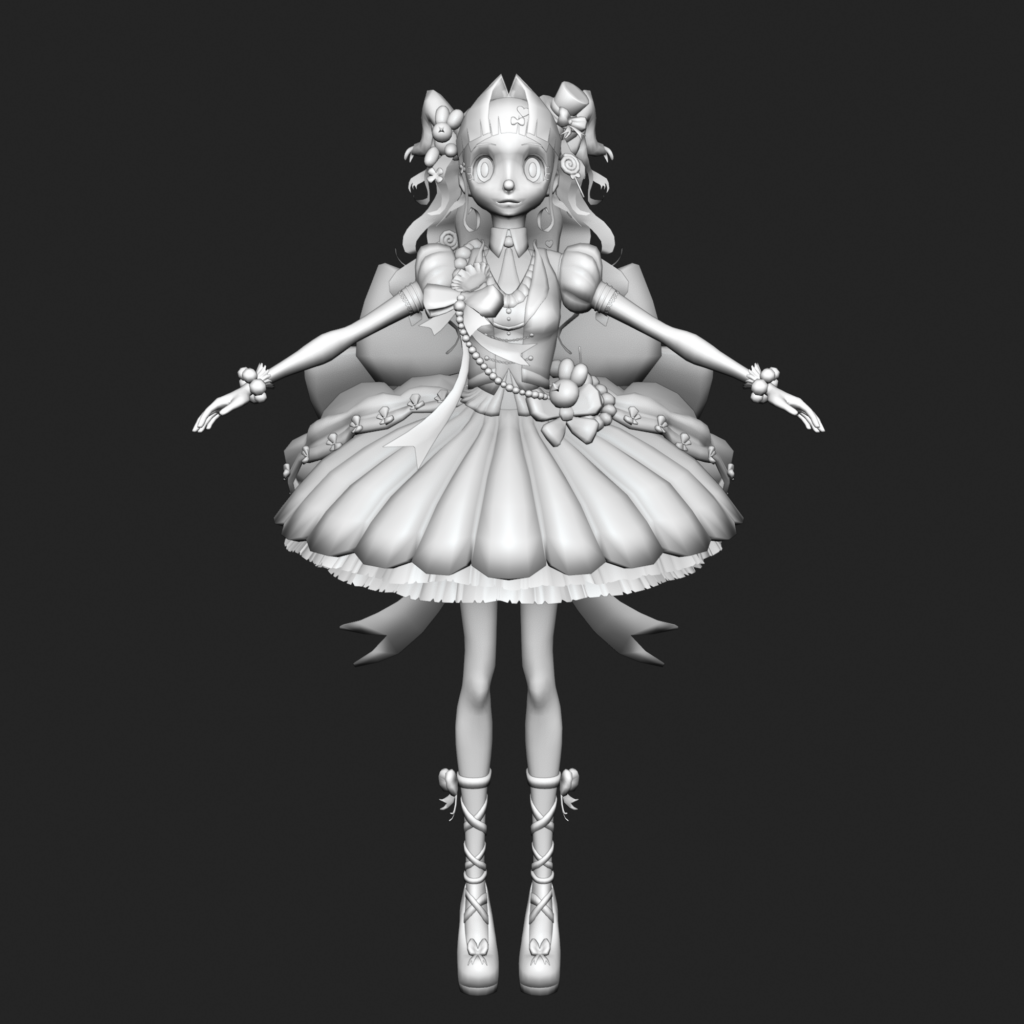
Solid
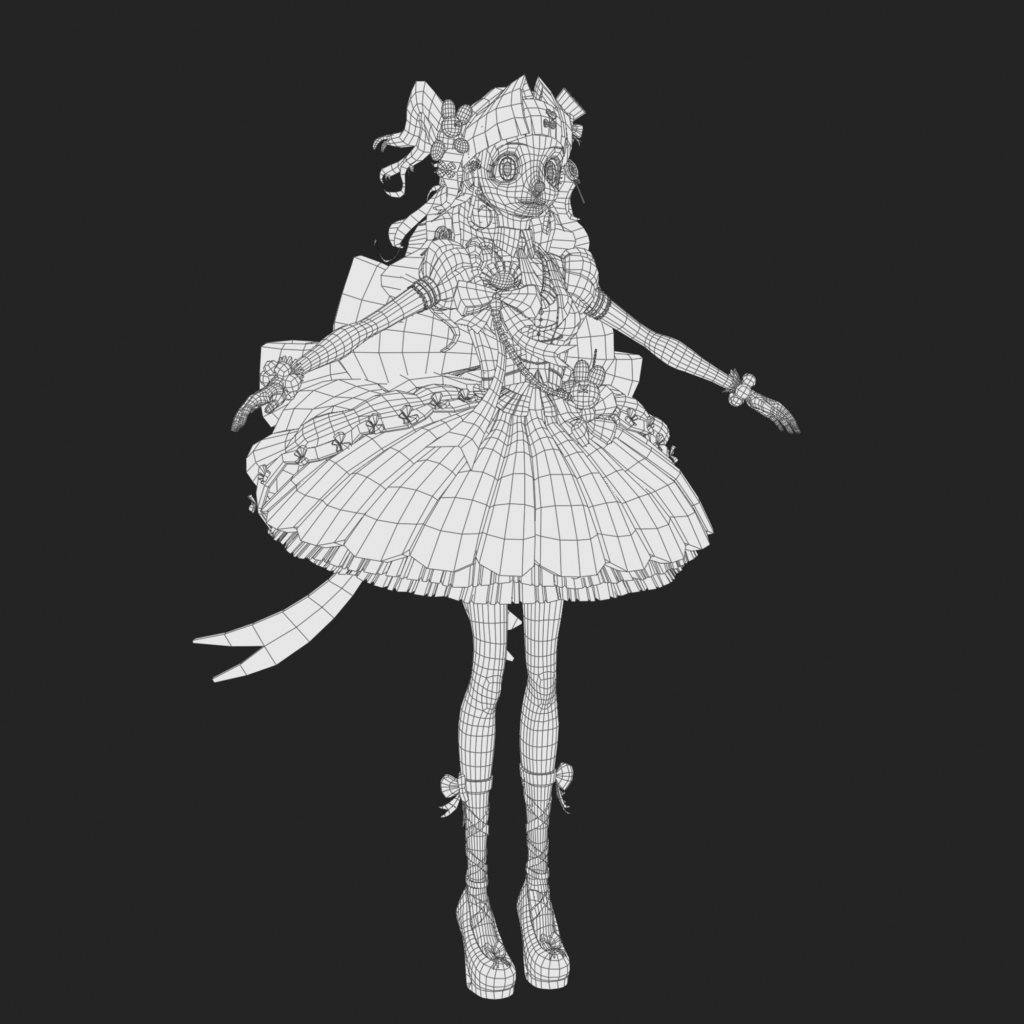
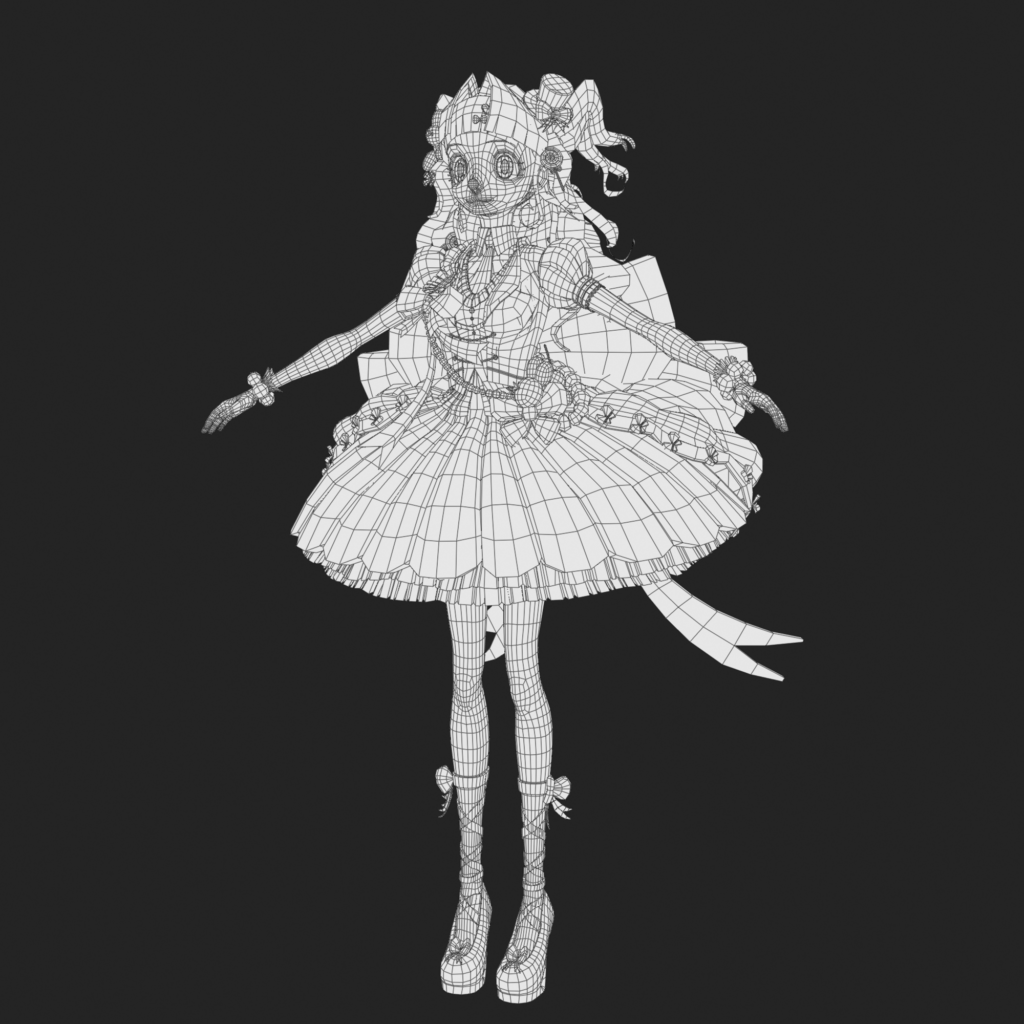
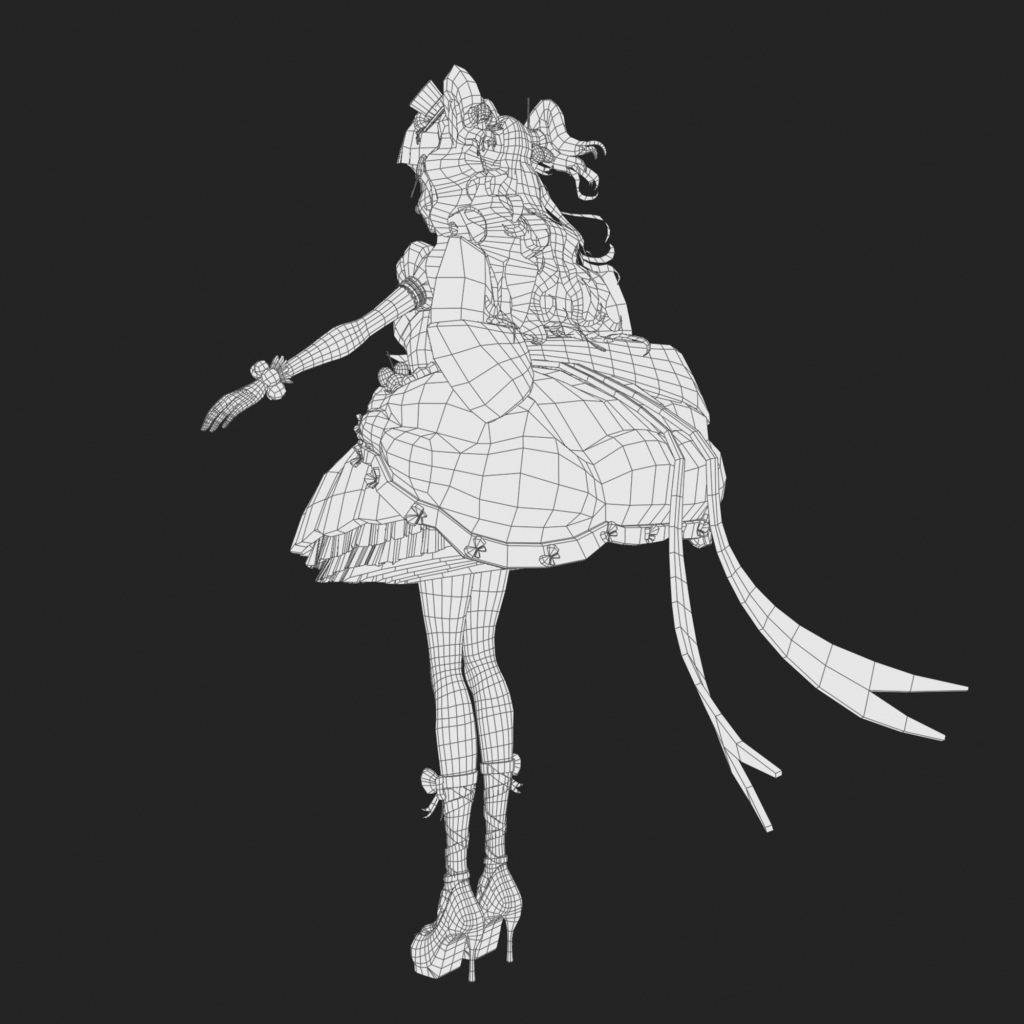
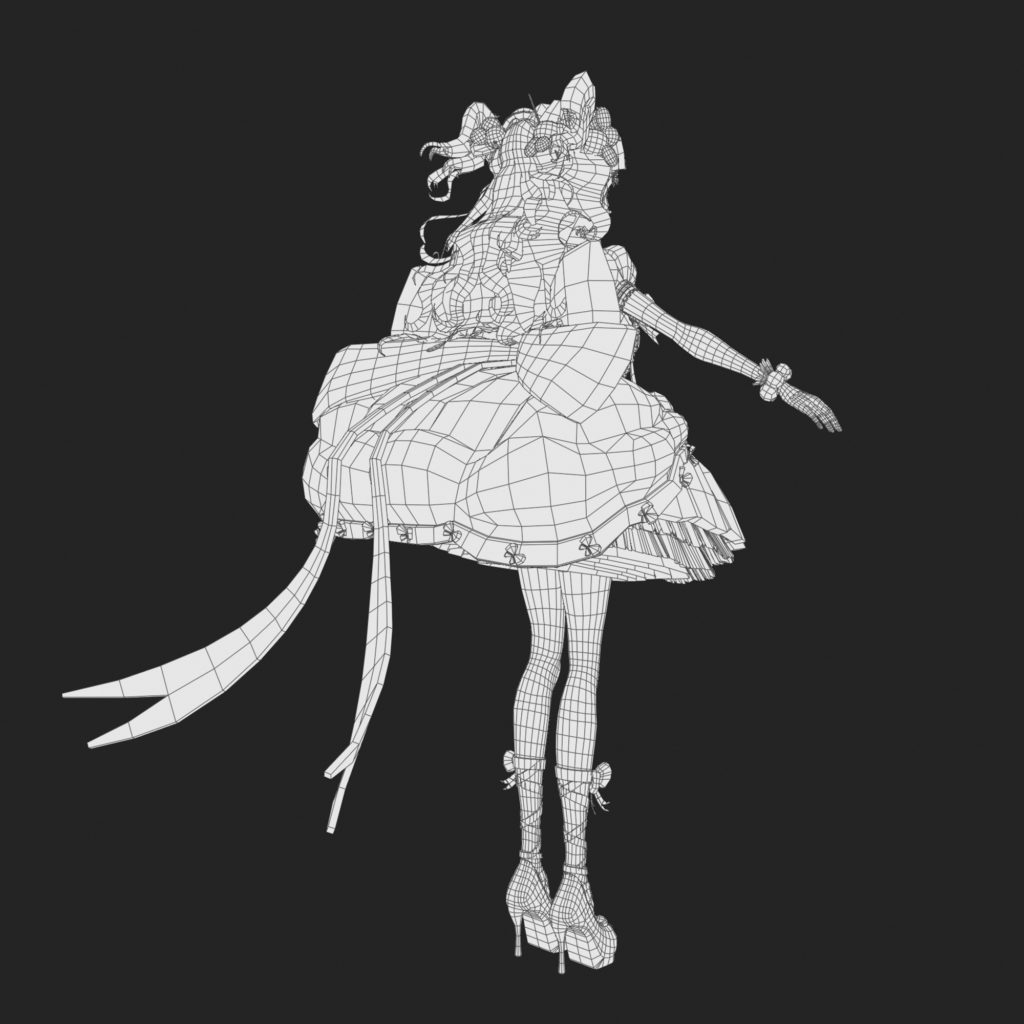
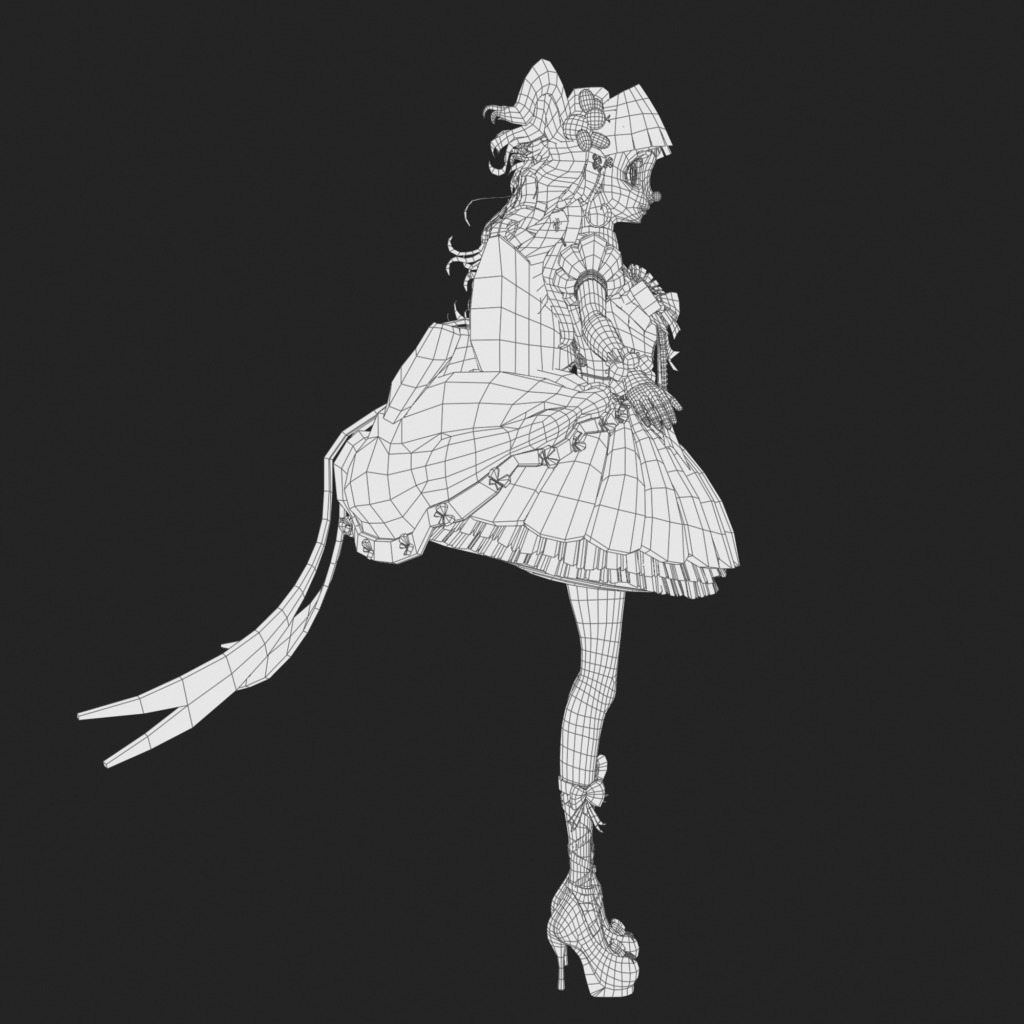
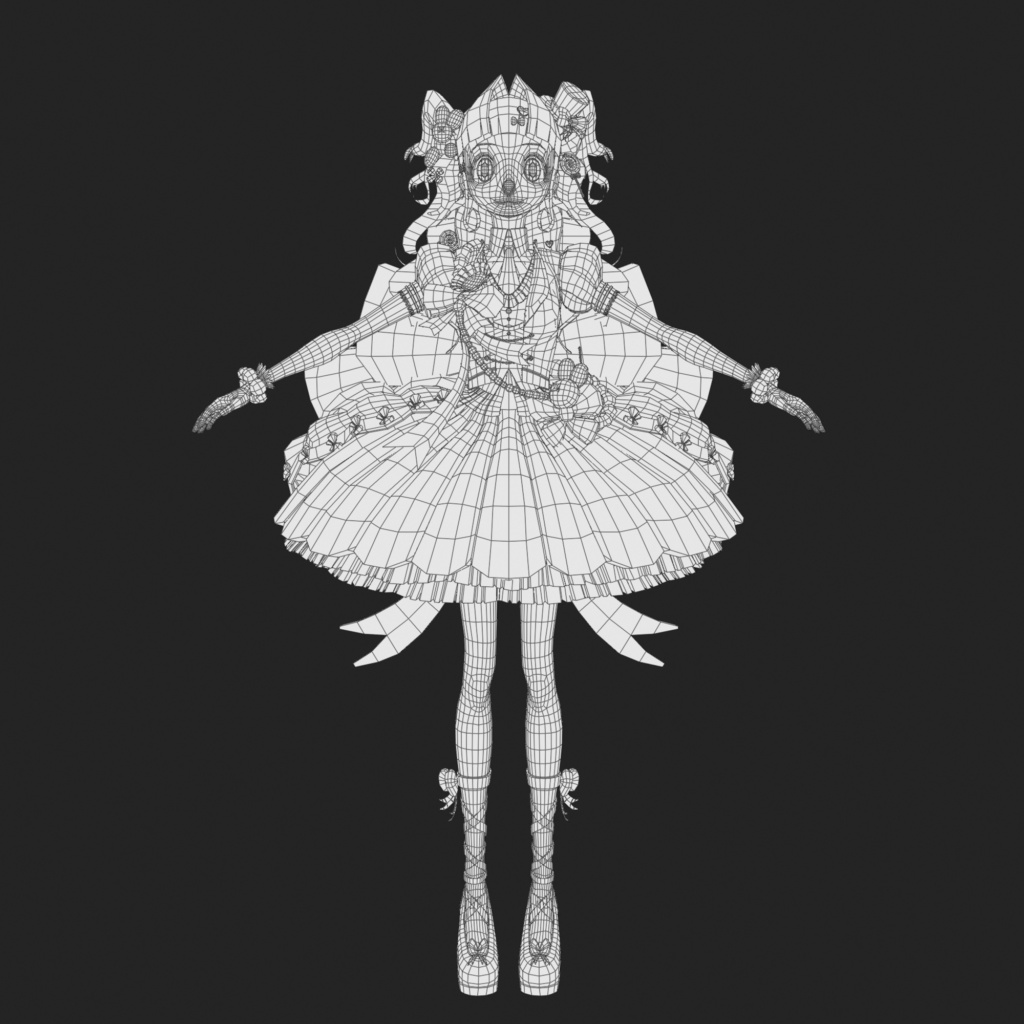
Wireframe
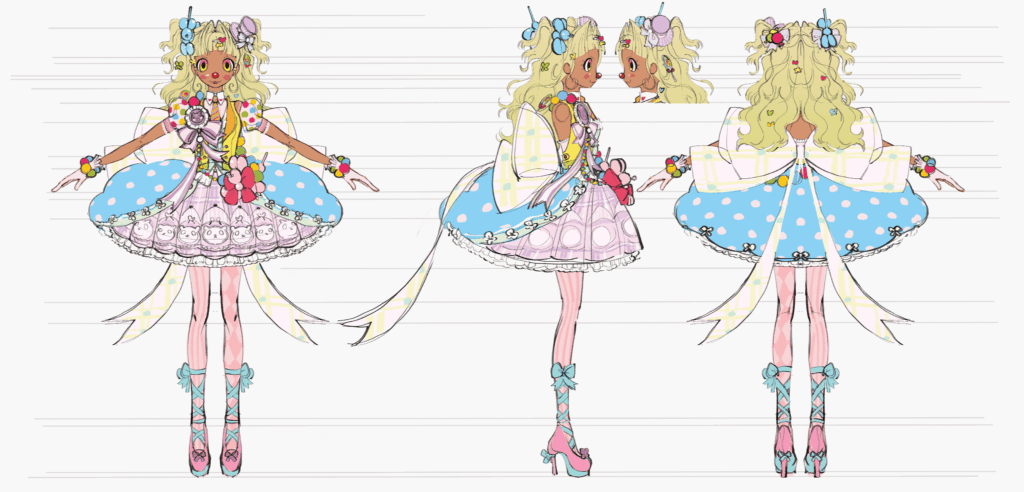
Concept Art Turnaround by Gabbi Levy
Environment
I created the layout and block out for the city environment in Magical Girls with Machine Guns.
I based a lot of what is seen in the environment from the key art created by Isa Olivieri (can be found down below)
Many of the prop assets were created by Zachary Deiner, Renee Carroll, Anantha Sathyanarayanan, and Eve Magana.
I created most of the basic building textures and materials.
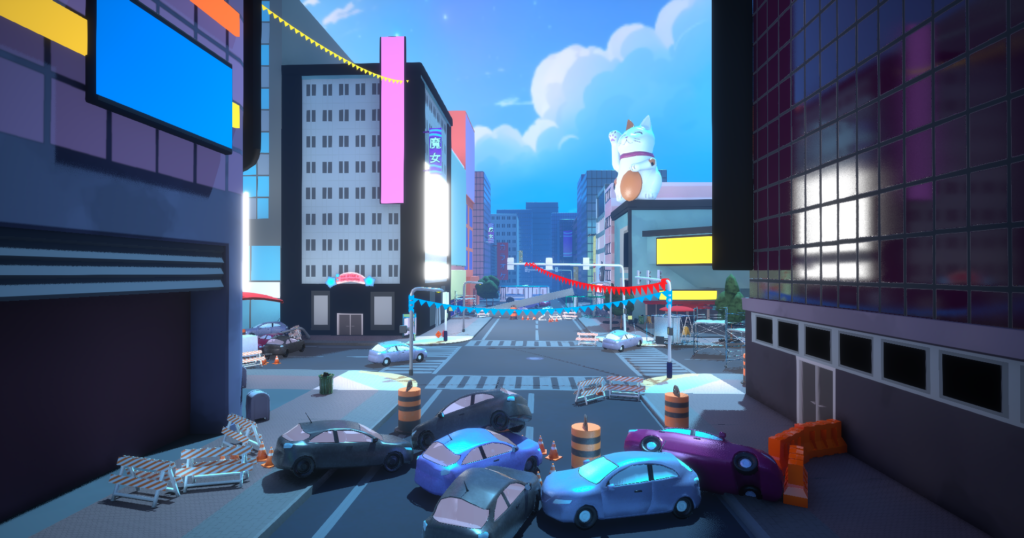
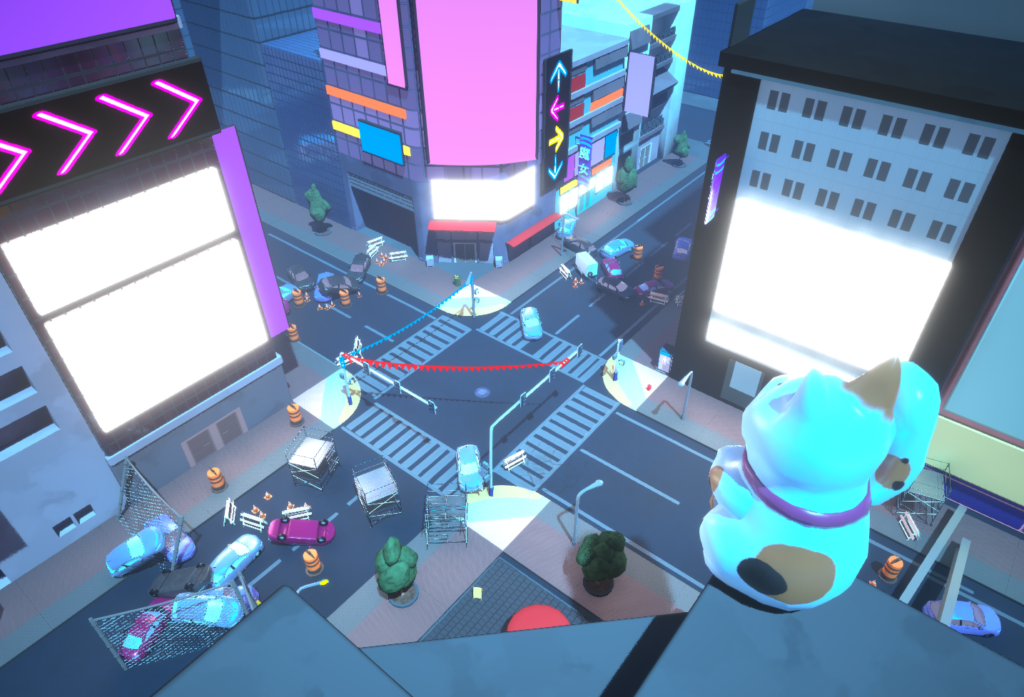
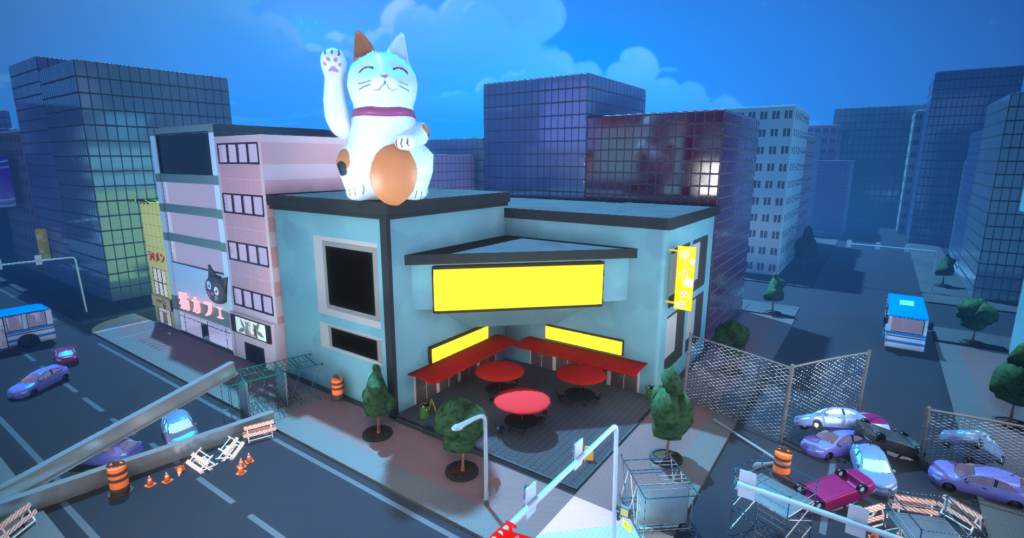

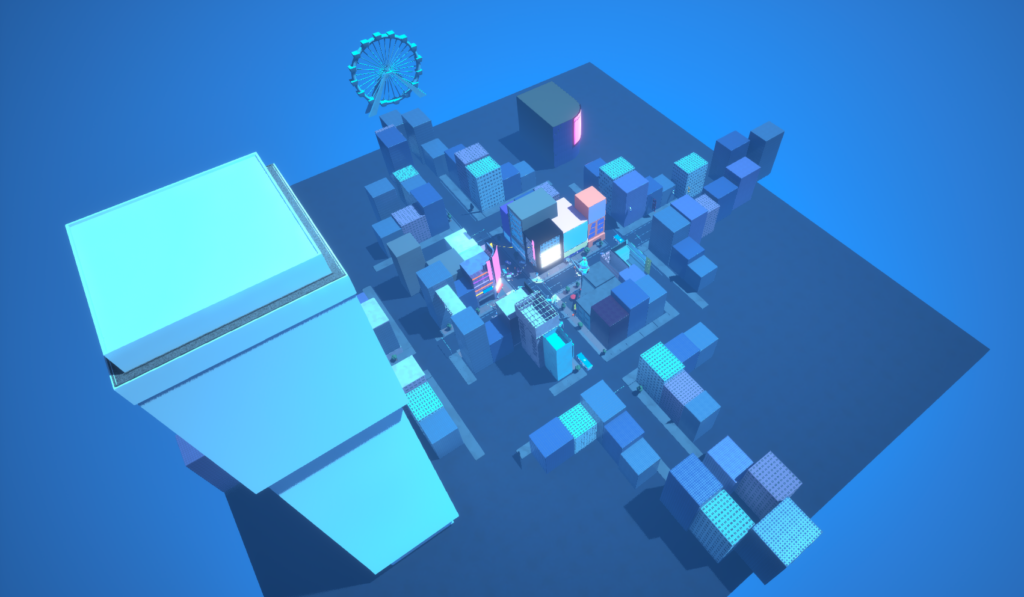
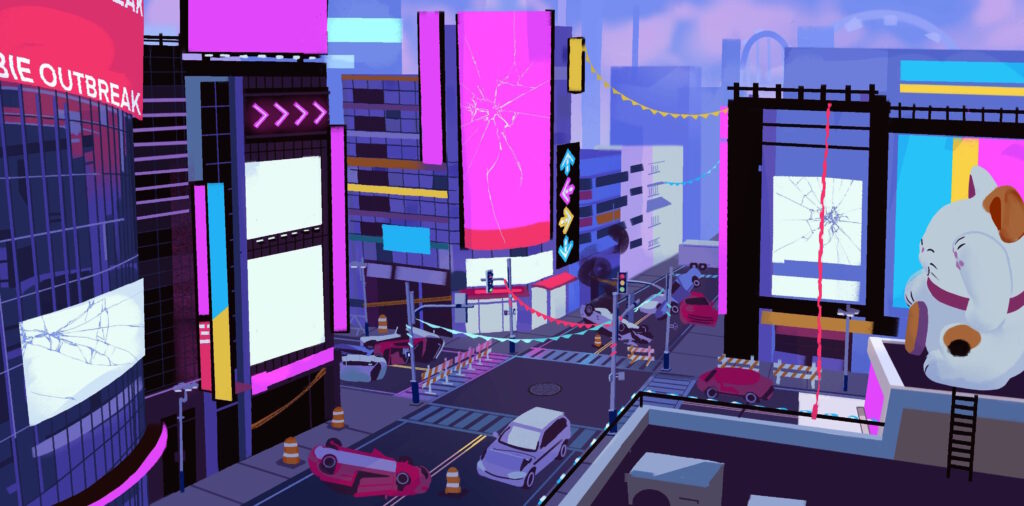
Environment Key Art by Isa Olivieri
UI / 2D Art




I designed the health bar for the game.
It features a beating heart animation and changes dynamically based on the player’s health.
It also uses a Voronoi distorted linear gradient mask to create a painted brush stroke type of effect.
Here is some character art that I’ve rendered out and painted.
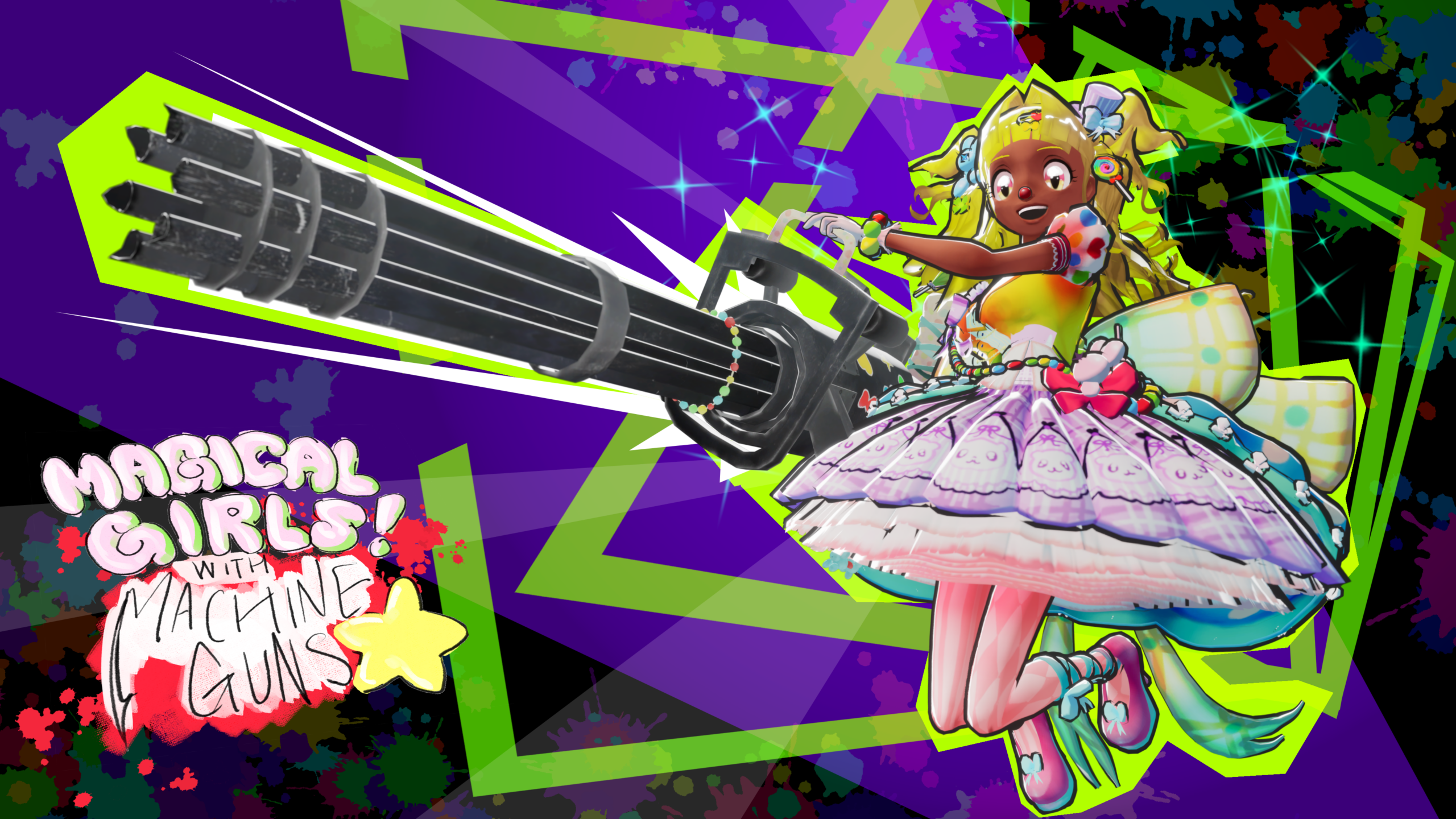
Minnie the Magical Minigun Girl
Anthony Le (Me) – Character Model, Weapon Surfacing, Materials, Pose, Render
Gabbi Levy – Character Concept Art & Character Surfacing
Eve Magana – Weapon Concept Art
Cole Schantel – Weapon Model, Rigging
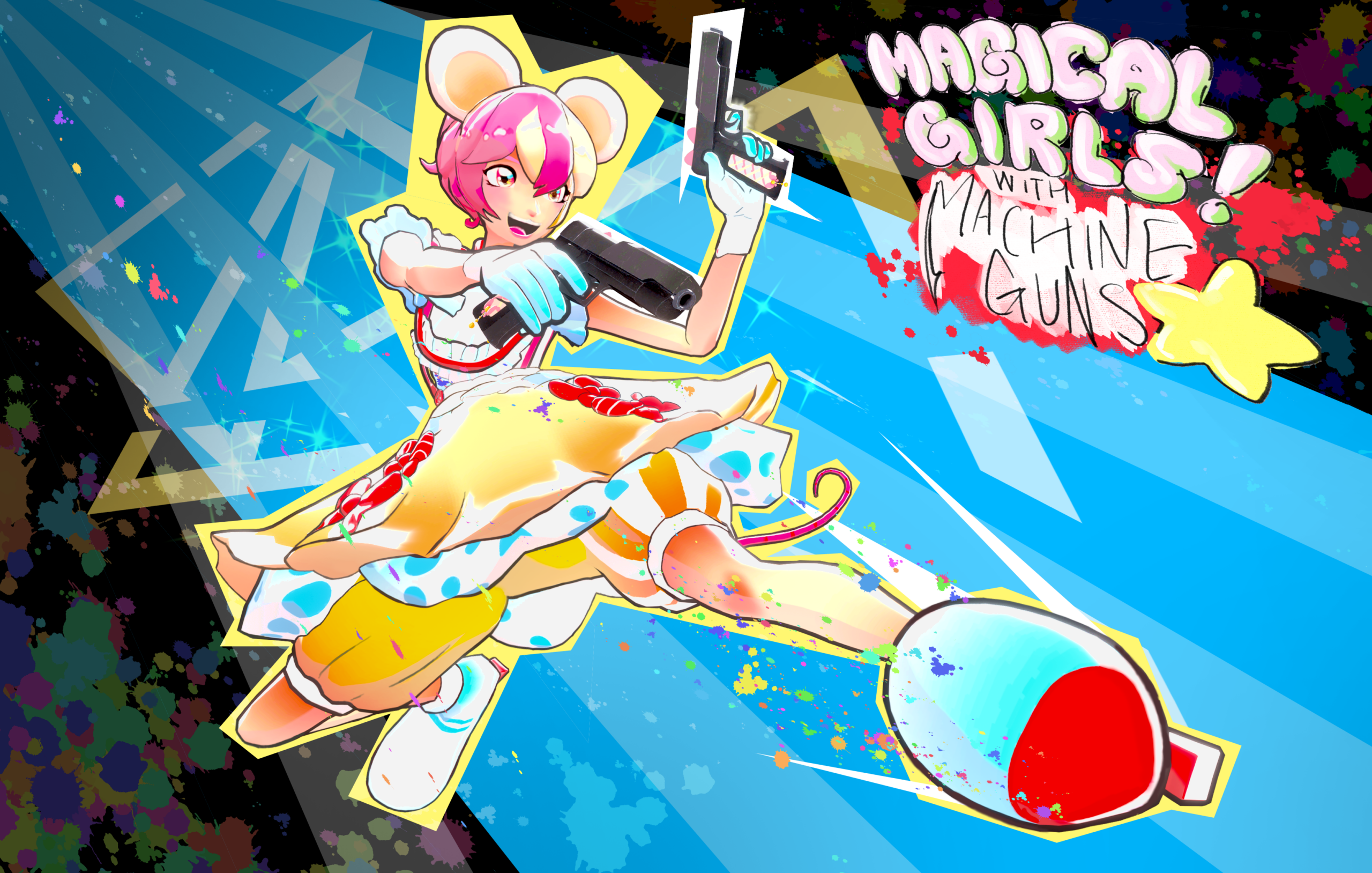
Chaka the Magical Pistol Girl
Anthony Le (Me) – Character Model Revisions, Materials, Pose, Render
Isa Oliveiri – Character Concept Art & Character Surfacing
Eve Magana – Weapon Concept Art
Cole Schantel – Character Model, Weapon Model, Rigging
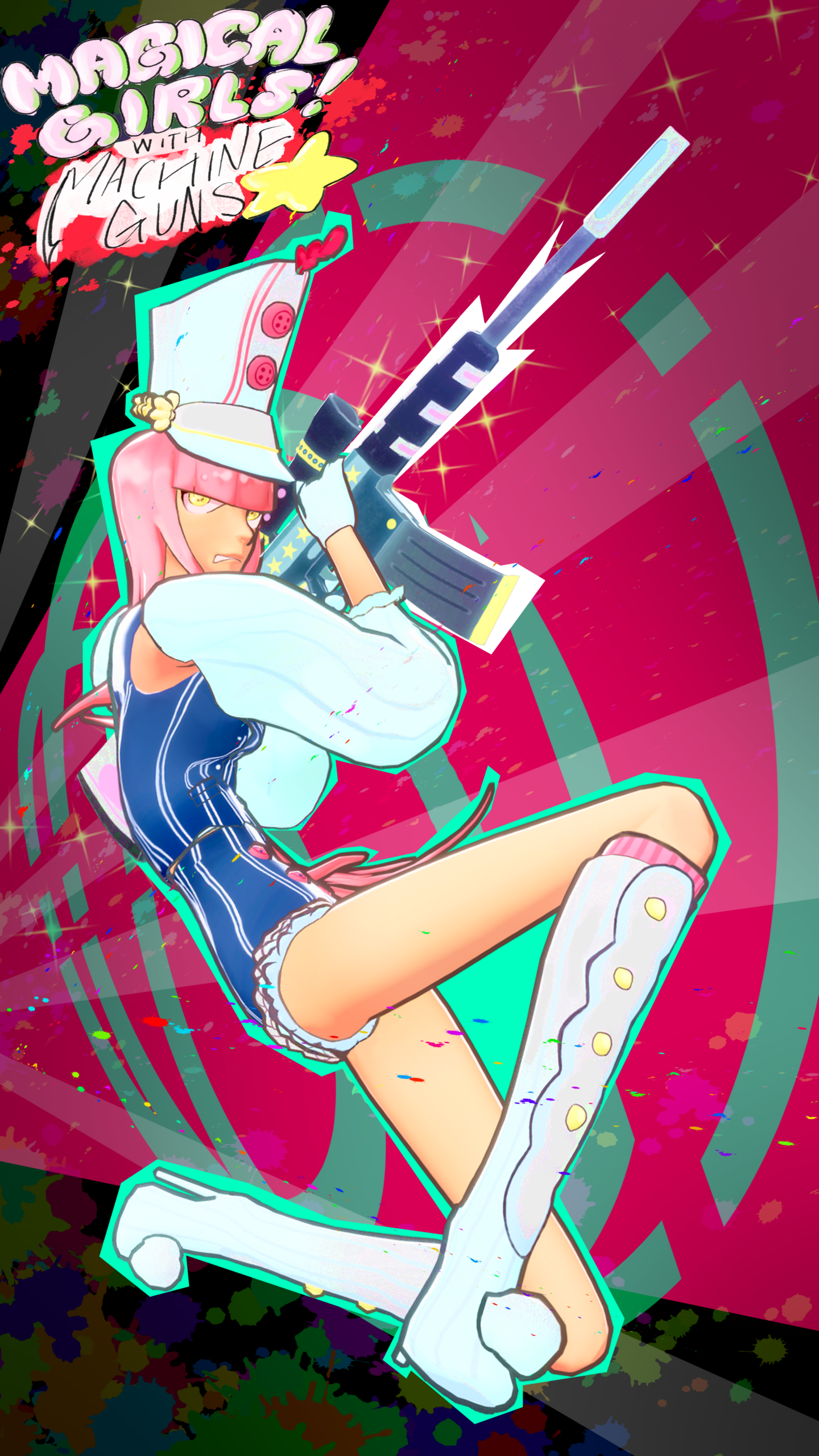
MK the Magical Sniper Girl
Anthony Le (Me) – Character Model Revisions, Materials, Pose, Render
Gabbi Levy – Character Concept Art
Isa Olivieri – Character Surfacing
Renee Carroll – Character Model
Eve Magana – Weapon Concept Art
Cole Schantel – Weapon Model, Rigging
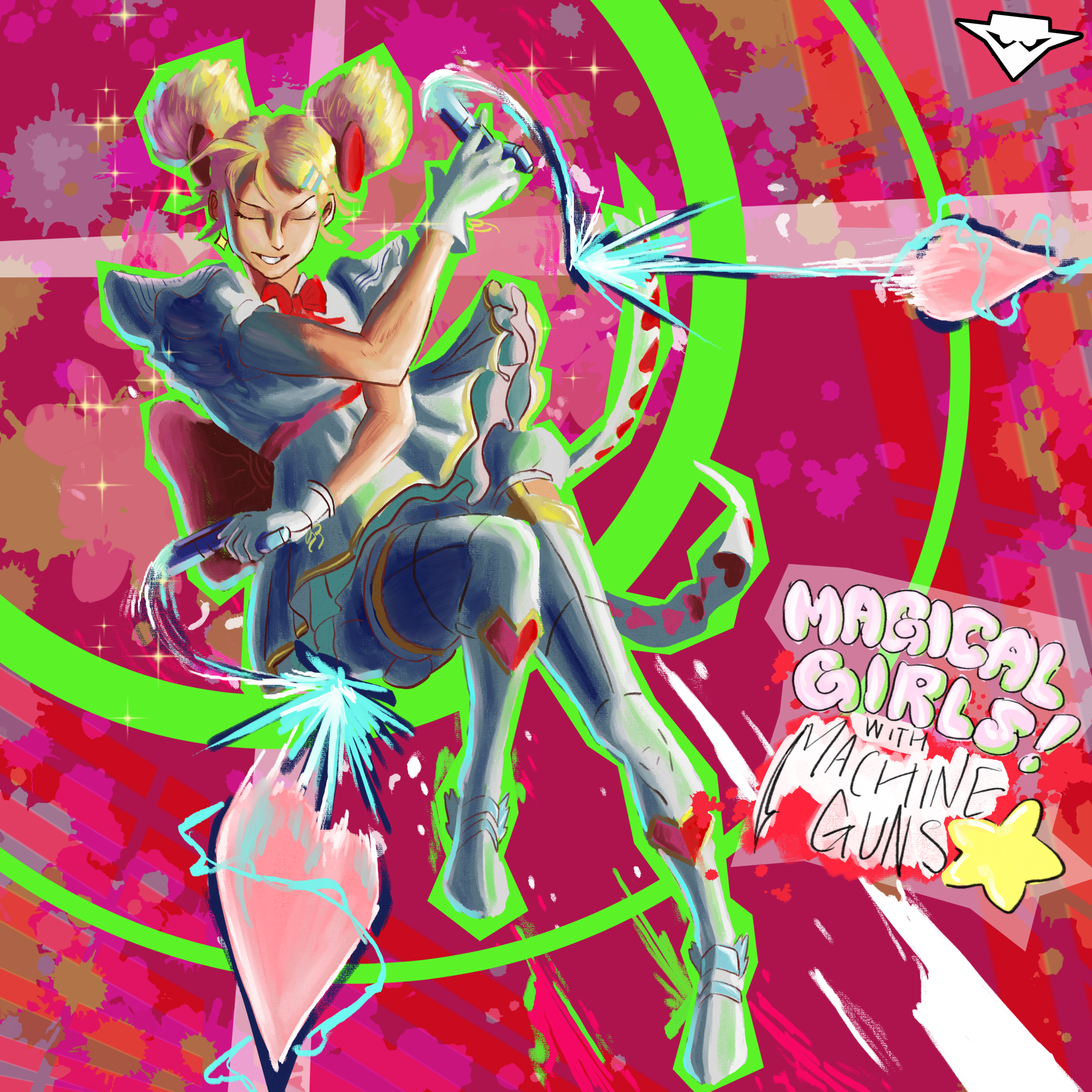
This is early concept art of the Pistol Girl that I made at the very start of this project to get the team an initial vision for the game could look.
I digitally painted this in Clip Studio Paint.
The background and color scheme was inspired by Yasukuni Kazumasa’s art and loved how poppy the colors in his work are so I aimed to emulate that a bit in this concept art.
Although we did not end up using this particular character design in the game, I am happy with how it turned out and wanted to show it.
Surfacing
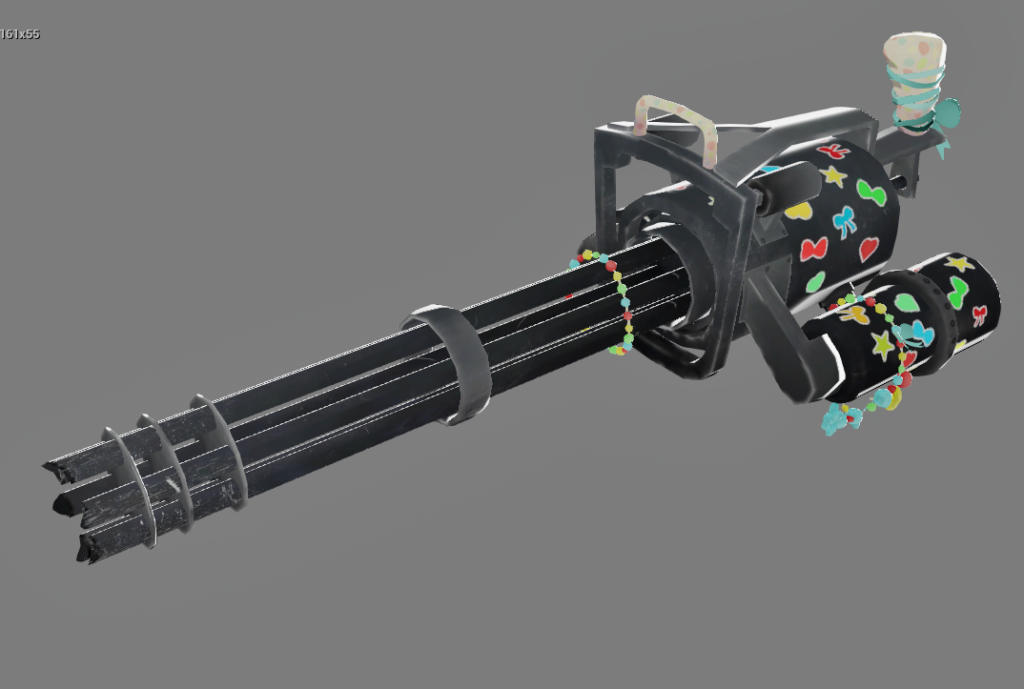
I surfaced this minigun following the concept created by Eve Magana. Cole Schantel created the weapon model.
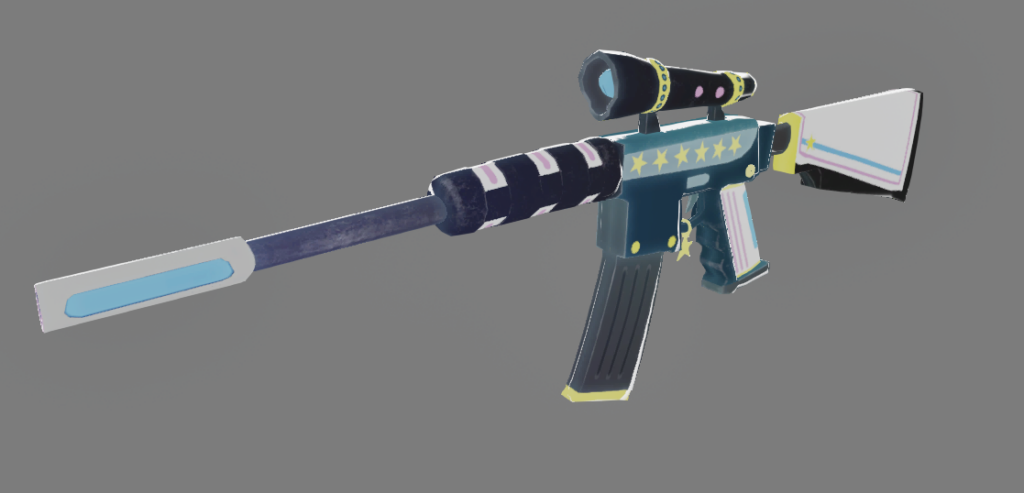
I surfaced this rifle following the concept created by Eve Magana. Cole Schantel created the weapon model.
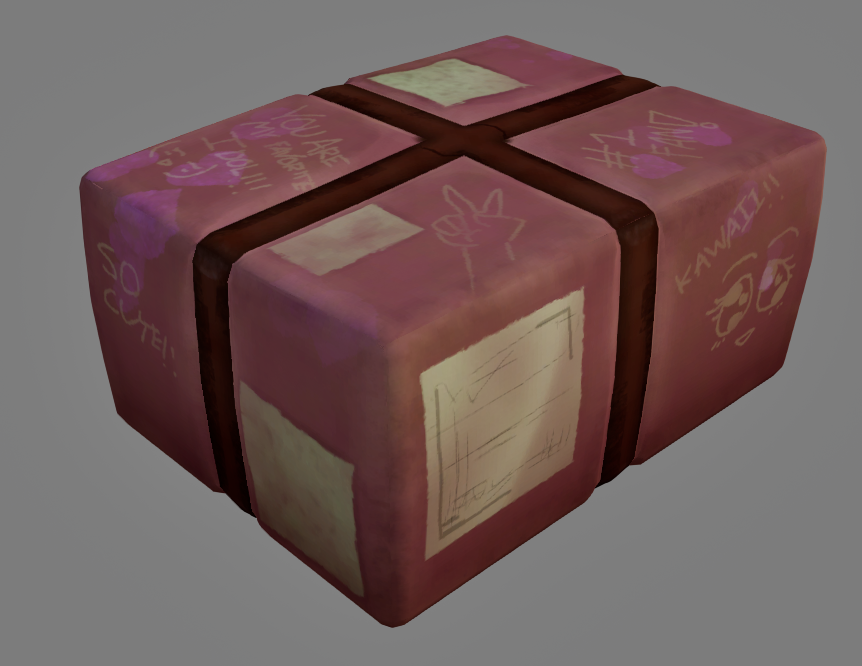
This is a fan mail package which is one of the objects in the game of which you interact with the most. The packages colors are analogous as they will randomize hue when spawned in the game.